

Binary Options Guide for Kenyan Traders
Learn how binary options trading works, the risks, strategies, and regulations in Kenya 🇰🇪. Get practical tips for safer, smarter investing 💡📈.
Edited By
Edward Shaw
Binary options trading has steadily gained traction among Kenyan traders looking for a faster-paced way to engage in the financial markets. Yet, unlike traditional trading, binary options require a sharp eye on timing and market signals to make smart calls on price direction within tight time frames.
This makes TradingView an incredibly valuable tool for Kenyan traders. Known primarily for its intuitive charting and technical analysis capabilities, TradingView helps simplify complex market data so you can quickly spot trends and potential opportunities.
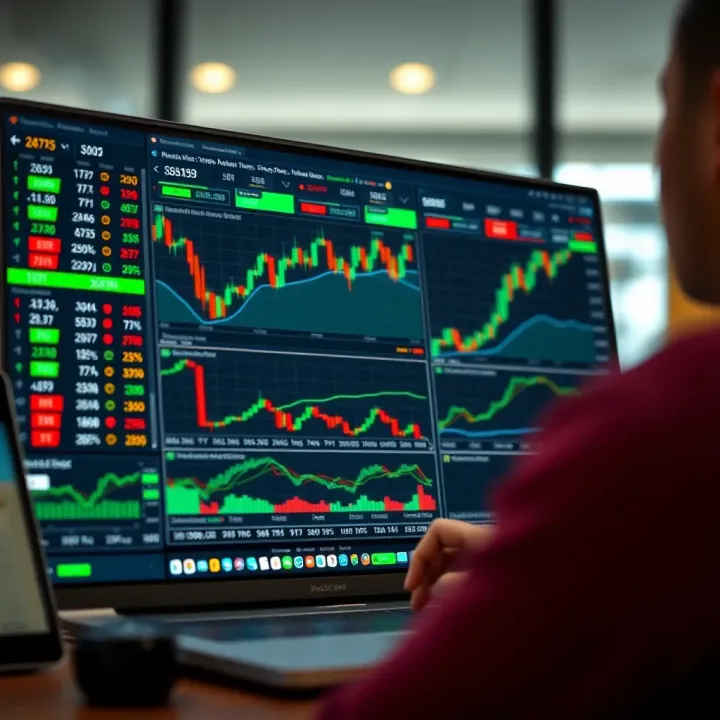
In this article, we’ll cover how to utilize TradingView specifically for binary options trading in Kenya. We’ll walk through the platform’s most useful features, share strategies tailored for binary trading, and point out risk management tactics to keep losses in check.
Whether you’re a seasoned investor or a newcomer, understanding how to read the market efficiently using TradingView can be a game changer in binary options.
We’ll also tackle the challenge of pairing TradingView with your preferred binary brokers — a step many overlook but which is crucial for a smooth trading experience. Plus, some market considerations unique to Kenya will be highlighted to give you a more localized edge.
By the end, you should have a solid grasp on integrating TradingView into your binary trading toolkit to make calculated and confident decisions in Kenya’s dynamic market environment.
Getting a good grip on TradingView and how it fits in with binary options trading is the first step for any trader in Kenya aiming to sharpen their game. Think of TradingView as your digital command center—even if you’re trading on M-Pesa from Nairobi, this platform offers insights and tools that help make sense of market moves before placing your bets.
The platform doesn’t just show fancy charts; it gives you the right info, when you need it, keeping you ahead in a game where seconds can mean the difference between profit and loss. It also bridges the gap between complex financial data and everyday traders by offering easy-to-use analysis features. This can be a lifesaver when you’re juggling multiple assets or watching for quick price changes, which is often the case with binary trading.
TradingView is like Google Maps for financial markets—it visually lays out where prices have been and hints at where they might go next using charts and technical indicators. It’s web-based, so you don’t have to fuss about downloading heavy software. For traders in Kenya, this means quick access whether you’re at home or logged in from your phone on the go.
With support for a vast range of assets—from forex pairs involving the Kenyan shilling to global commodities—you’re not locked in one corner of the market. It’s this versatility and responsiveness that make TradingView so valuable, especially for binary options traders who rely heavily on timing and trend recognition.
TradingView covers stocks, forex, commodities, cryptocurrencies, and more—all in real-time or near real-time feeds. For a Kenyan trader, this means you can track the USD/KES pair alongside international stocks or oil prices without switching tabs.
For example, if you spot a sudden shift in Brent crude prices, using TradingView, you could quickly analyze charts and decide if placing a binary option on energy stocks makes sense. This variety of instruments makes it a one-stop shop for varied trading needs, helping users avoid missing out due to lack of timely data.
TradingView’s interface is designed for both newbies and pros. On first glance, it offers clean charts and a toolbox on one side, letting you pick indicators or draw trendlines without hunting through menus. The controls are intuitive: zoom in and out with your mouse wheel, drag charts left to right, and tap icons to switch between different chart types.
The layout is customizable, so you can set up multiple windows to compare forex pairs or monitor different assets simultaneously. This flexibility helps binary traders quickly spot key price action signals across markets—even if you’re juggling other tasks on the side.
Binary trading boils down to predicting whether an asset’s price will be above or below a set level at a specific time. It’s called “binary” because the outcome has two clear paths: you either win for a correct call or lose if you guess wrong. There’s no owning the asset or dealing with complex spreads.
For Kenyan traders, this simplicity is a plus, but it also means the stakes can be high. Each trade is like a bet with a fixed payout, and knowing when to make a call is where tools like TradingView shine.
Unlike traditional trading, where you might hold a stock or currency for days or months, binary trading is short-term and focused on direction instead of value change. You don’t need to worry about owning actual shares or forex contracts.
This difference requires a sharper focus on timing and market signals. It’s less about accumulating assets and more about getting the timing and trend prediction right, often within minutes or hours.
Binary traders often pick from forex pairs (like USD/KES, EUR/USD), commodities (oil, gold), or stocks (Apple, Tesla). In Kenya, forex pairs involving the shilling are popular due to accessibility through brokers and local economic relevance.
Cryptocurrency assets like Bitcoin or Ethereum have also grown in popularity among Kenyan binary traders, adding volatility and opportunity but increasing risks too.
TradingView offers simple but effective charting tools that help you spot when an asset might move up or down. Tools like candlestick charts, volume bars, and moving averages can clue you in on price momentum or potential reversals.
For example, spotting a ‘doji’ candle or a breakout from a resistance line could give a Kenyan trader that extra edge to place a binary call with confidence.
In binary trading, timing is everything. Getting delayed data is like trying to catch a train that just left. TradingView’s real-time or near real-time data streams help traders react fast to sudden moves, which is essential when binary expiries last only minutes.
Even a few seconds’ advantage in seeing price changes can be the difference between winning and losing a trade.
The TradingView community is pretty active—they share custom scripts and indicators you might not find anywhere else. This crowd-sourced knowledge can help Kenyan traders experiment with new strategies or get a second opinion on chart setups.
Scripts that combine RSI with moving averages or highlight unusual volume spikes can be especially handy in binary trading, where quick and clear signals are gold.
By mastering TradingView’s tools and understanding binary trading basics, Kenyan traders can navigate markets more wisely and boost their potential returns, even in fast-moving scenarios.
Before diving into trades, setting up TradingView correctly for binary options analysis can make a huge difference. The right setup cuts through the noise and gives traders in Kenya clearer signals to act on. It’s about tailoring the platform to fit the fast-paced nature of binary trading, which often requires quick decisions based on short timeframes and precise technical insight.
Proper configuration ensures that traders can monitor price action efficiently, spot entry and exit points, and adapt strategies on the fly. For instance, adjusting charts and indicators to highlight short-term price fluctuations helps when you’re predicting whether an asset will go up or down within minutes or hours — the crux of binary options.
In binary options, timing is everything. Picking the correct timeframe on TradingView charts impacts your ability to catch meaningful moves without getting lost in market noise. Most traders find that 1-minute, 5-minute, and 15-minute charts work best for short expiry trades, common in binary options.
For example, if you’re trading a 15-minute binary option on EUR/USD, using a 1-minute or 5-minute chart gives insights into the immediate price trend and momentum. Longer timeframes tend to be better for understanding general market direction rather than pinpointing entry.
Stick to shorter timeframes during volatile market hours — like when the London and New York sessions overlap — to catch swift price swings. Using a mix of these timeframes can help verify signals and avoid chasing false moves.
TradingView lets you customize chart layouts, which is a game-changer for staying organized. You can open multiple charts side by side showing different assets or timeframes without clicking back and forth.
For a Kenyan trader juggling forex and commodities like gold or oil, setting up a multi-layout dashboard helps track several markets at once. You might have a 5-minute chart of USD/KES alongside a 1-minute chart of Brent Crude.
Additionally, you can personalize color themes, grid visibility, and candlestick types to reduce eye strain during long sessions.
A clean, well-arranged chart setup reduces errors, speeds decision making, and keeps you focused — critical when seconds can make or break a binary option trade.
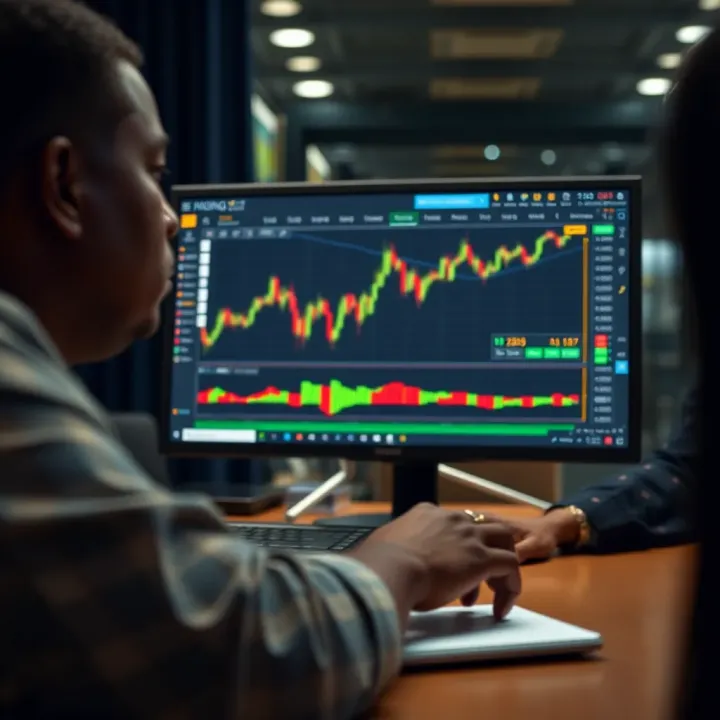
Some indicators resonate well with binary trading’s quick in-and-out style. Relative Strength Index (RSI) is popular for spotting overbought or oversold conditions to anticipate reversals. Bollinger Bands help identify volatility and possible breakout points.
Moving averages (like EMA 9 and EMA 21) spotlight trend direction and crossovers that hint when momentum is shifting. Stochastic Oscillator is another fave for Kenyan traders looking to catch short-term trend turns, especially in currency pairs.
These tools aren’t foolproof alone, but they guide decisions when combined properly.
Trying to trade on just one indicator is like fishing with a single line; you might catch something, but chances improve with a few rods. Pairing RSI with Bollinger Bands, for example, offers a dual perspective on momentum and volatility. When RSI moves out of overbought territory while price hits upper Bollinger Band, it can signal an imminent price reversal.
Similarly, layering moving averages with MACD helps confirm if a trend is gaining strength or losing steam. The trick is to avoid clutter — two to three indicators max — and watch how signals from these tools line up before entering a trade.
Drawing support and resistance on TradingView unlocks hidden price psychology. These horizontal lines mark where buyers and sellers typically enter the market, making them prime areas for price to bounce or break through.
For instance, if you spot a strong resistance level on the USD/KES chart around 110.50 and price tests it multiple times without breaking, betting on a down move could pay off.
Kenyan traders can draw these lines quickly on TradingView and adjust them as new data comes in, helping decide where to place binary options "up" or "down" trades.
Trendlines connect price lows or highs to frame the market’s direction visually. They’re invaluable for spotting breakout trades on assets like coffee futures or local indices.
Recognizing basic patterns like triangles, flags, or head and shoulders can signal when a market is about to change direction. For example, a rising wedge pattern formation on the Nairobi Securities Exchange chart may hint at a reversal, giving a heads-up for a possible "put" option.
Drawing trendlines helps maintain discipline by relying on visual cues over gut feelings, key for managing binary trade risk.
Setting up TradingView thoughtfully enhances binary options trading by sharpening market insights and improving entry precision. For traders in Kenya, the ability to customize charts, blend indicators, and draw critical price levels makes all the difference in navigating dynamic markets and boosting the odds in their favor.
Creating effective binary trading strategies on TradingView is a vital step for Kenyan traders aiming to increase their chances of winning trades and managing risks better. TradingView's platform lets traders test and tweak various approaches using its real-time charts and historical data. Developing a clear strategy reduces guesswork and emotional trading, which is often where many beginners stumble.
A good strategy on TradingView doesn’t have to be overly complex. It should blend tools and indicators that fit your style and trading preferences. This helps you consistently spot entry and exit points based on market behavior, rather than relying on luck or hunches. For instance, you could combine moving averages and RSI to confirm trends before taking a binary position.
Trend-following is one of the most straightforward and popular strategies. The core idea is to trade in the direction the market is moving. If the price steadily climbs, you buy call options; if it consistently falls, you buy put options. On TradingView, you can spot trends using tools like moving averages or the MACD indicator. For Kenyan traders, sticking to the trend can be especially useful during active market hours, like when London and New York sessions overlap, since price momentum tends to be stronger.
This strategy focuses on identifying moments when a current trend is likely to end and flip the other way. Reversal signals might come from candlestick patterns such as pin bars or engulfing candles or indicators like the Stochastic Oscillator showing overbought or oversold conditions. Reversals are trickier but can yield quicker profits. On TradingView, you can use alerts to notify when these signals occur, saving you from staring at charts all day.
Breakout trading looks for price moving beyond established support or resistance levels. When the price breaks a strong resistance, it indicates new buying interest, prompting a call option. If it breaks below support, a put option might be appropriate. TradingView’s drawing tools make spotting these levels easy. Practically, watching volume increase during breakouts helps confirm if it’s a genuine move, guiding you to avoid false signals.
One of TradingView’s biggest perks is access to detailed historical data. Backtesting means running your strategy against past market conditions to see how it would have performed. This lets Kenyan traders avoid costly trial and error with real money. For example, you can test how a trend-following strategy worked during volatile events like the forex market swings in 2022.
Backtesting results provide metrics like win rate, drawdown, and overall profitability. But it’s not just numbers—you need to analyze why certain trades failed or succeeded. If, say, your breakout strategy shows many losses during low-volume periods, you might decide to add volume filters before trading. This step helps refine strategy logic and improves confidence before applying it live.
TradingView allows users to set customizable price alerts, which can be a game-changer for busy Kenyan traders. Instead of checking prices constantly, you get notified exactly when market conditions fit your strategy criteria. For example, setting alerts for when the price crosses a moving average or hits support.
Notifications can come via email, pop-ups, or app alerts. This flexibility ensures you won’t miss critical trade opportunities, especially when the Nairobi market is quiet but global markets are active. Automating alerts helps maintain discipline, nudging you to act swiftly without second-guessing.
Developing solid binary trading strategies on TradingView empowers Kenyan traders by bringing structure, data insights, and timely alerts into their trading routine, making the process more manageable and less risky.
Integrating TradingView with binary brokers is a practical step that can boost a trader's efficiency and decision-making process. In Kenya, where speed and accuracy matter due to volatile markets, linking your analysis on TradingView directly with your broker's platform helps cut down the time between spotting an opportunity and placing the trade. This integration helps traders eliminate guesswork and reduces the risk of missing out on trades caused by slow manual input. Although TradingView itself doesn’t execute trades, the platform can be paired effectively with brokers to provide near real-time signals and alerts, streamlining the overall trading process.
Manual interpretation versus direct connection
Most Kenyan traders start with manual interpretation—analyzing charts on TradingView and then entering trades manually on their broker’s platform. While this method is straightforward, it leaves room for delays and mistakes, especially when markets move fast. Direct connections, although less common for binary options, allow brokers to use TradingView's charting tools and signals as a sort of live dashboard. That means when a signal is triggered on TradingView, the broker’s system can quickly act on it, slashing the lag time and tightening the link between analysis and execution.
It's worth noting that fully automated trading isn't widespread among binary brokers, but some like IQ Option or Pocket Option offer integration features that sync with TradingView alerts. Kenyan traders should evaluate whether the broker supports API connections or third-party tools that facilitate this link.
While many binary brokers operate independently of TradingView, some have made efforts to allow seamless use alongside TradingView’s tools. For example, IQ Option enables traders to use its platform in tandem with TradingView charts, though trades still need to be placed manually. Similarly, Pocket Option supports exporting indicator data and chart patterns from TradingView for quicker analysis.
Kenyan traders should be cautious and pick brokers that reliably show accurate pricing and offer sensible spreads. Binomo and Olymp Trade also get mentioned frequently by users for decent charting support and relatively low fees, although direct TradingView integration may be limited.
Once your analysis is ready, the trick is balancing speed with precision when placing trades. Manual execution demands fast reflexes; lag exacerbates losses especially in binary trading, where mere seconds can change outcomes. Using TradingView alerts integrated with your broker's platform can be a lifesaver. For instance, setting price or indicator alerts ensures you don’t stare at charts all day but still get notified the moment key setups occur.
Kenyan traders can simplify execution by preparing watchlists and favorite pairs ahead, so trades require fewer clicks. Also, knowing your broker’s interface inside-out shortens response time. Executing trades with minimal hesitation often separates winners from losers.
Binary options markets can be lightning-fast, especially during high-impact news or market open hours. You might see a pattern perfectly lining up on TradingView, but if your trade takes 30 seconds to confirm, that one price move could wipe out anticipated profits. Slowing down to click through confirmation prompts or login hassles only makes this worse.
To avoid delays, Kenyan traders should:
Keep TradingView and broker apps open simultaneously
Disable unnecessary confirmations on brokers if possible
Use reliable and fast internet connections
Consider mobile apps that might execute faster for some brokers
Quick execution isn’t just about speed; it’s about keeping your trades aligned with your analysis to protect your edge.
Managing risk isn’t just a good idea—it’s a must when trading binary options, especially in fast-moving markets. TradingView offers tools that make spotting potential pitfalls easier and gives you a better chance to protect your capital. Without solid risk controls, even a well-planned trade can quickly turn sour. By using TradingView’s charting, alerts, and analysis features, Kenyan traders can set clear safety nets to avoid big losses.
On TradingView, stop loss and take profit levels aren't just theoretical concepts; they’re visual cues you can draw on your charts. Support and resistance lines, for example, help indicate where price might reverse or pause. These areas are prime spots to set stop loss slightly beyond, limiting losses if the trade goes against you. Similarly, identifying a realistic take profit target often involves spotting recent highs or lows where price tends to stall. Drawing horizontal lines or boxes around these key levels keeps your exit points clear.
Using these identifications hands-on means you’re tuning into the market’s natural rhythm. It’s like knowing when to duck or cover during a storm. If a stock or currency pair shows consistent bounce patterns, you set your limits just outside those zones, reducing guesswork. In binary options, where expiry time is fixed, having these levels visible helps you judge if the move is likely to hit your target before time runs out.
Unlike traditional trading, binary options don’t use stop loss and take profit in the usual sense because you’re betting on price direction rather than holding an asset. However, the concept still applies as a mental or chart-based limit for entering trades. For instance, if TradingView shows a resistance level at 1.2500 on USD/KES, you might decide to enter a 'put' option just below this level. If price closes above 1.2500 before your option expires, you know your trade is likely a loser and should have planned accordingly.
Think of these levels as guideposts rather than strict exit orders. They shape your entry strategy and help avoid impulsive trades during volatile times. Setting alerts on TradingView when price approaches these pivotal points can be a lifesaver, allowing you to rethink or tighten the trade before expiry.
TradingView helps you plan your bankroll more wisely by providing clear charts and reliable data to base your trade sizing on. The golden rule is never to risk more than a small fraction of your capital on a single trade—often recommended between 1% to 5%. For example, if you have KES 100,000, placing trades worth KES 1,000 to KES 5,000 keeps you in the game longer and cushions against a losing streak.
Visualizing this on TradingView can reinforce discipline. By analyzing the volatility of an asset, you know when to scale your trades down—like stepping soft during a shaky market. You can use indicators like Average True Range (ATR) to gauge price swings before deciding trade size. Safer, smaller bets during turbulent periods mean fewer nasty surprises.
TradingView’s alerts and customizable watchlists help prevent overtrading, which often happens when traders try to chase every signal or recover losses quickly. Overtrading drains your bankroll fast and clouds judgment.
By setting strict criteria for entries based on your indicators and price levels, and relying on TradingView’s notification system, you stay focused. It’s better to miss a good opportunity than to blindly jump on every move. For example, you might limit yourself to 3 trades a day or trade only during the most liquid hours when price action and data quality are solid.
Successful traders don’t just hunt for big wins—they carefully manage risks by sizing trades smartly and knowing when to step back.
In practice, combine TradingView’s chart insights with a trading journal or spreadsheet to monitor your trade frequency and results. Seeing patterns in your behavior makes it easier to cut out overtrading habits and grow your profits steadily.
By integrating these risk management techniques with TradingView’s tools, Kenyan traders can keep losses manageable, sharpen their strategy, and make more informed decisions every trade. Risk control isn’t just about avoiding losses—it’s about staying steady and ready for the next opportunity.
Navigating the world of binary trading with TradingView is exciting, but it ain't all sunshine. Understanding the platform's constraints and common pitfalls can save Kenyan traders from costly errors. This section breaks down the real hurdles you’re likely to face and how to manage them, so you stay ahead without chasing shadows.
One major snag with TradingView is the limitation on data access for binary traders. While the platform offers an impressive range of markets, not all binary-specific assets or brokers' live feeds are fully integrated. For example, some volatility indices or short-term contract data common in binary trading might not be available in real time or come with slight delays.
Think of it as trying to watch a live football match but only getting half of the camera angles—you miss important plays. This means you can’t solely rely on TradingView data to make split-second binary decisions without double-checking with your broker's interface. The way around this is using TradingView mainly for analysis while cross-referencing real-time prices on your broker’s platform.
TradingView does not support placing binary options trades directly through its interface. You can edit, analyze charts, and set alerts, but ultimately trade execution requires hopping over to your chosen broker's platform. This disconnect can lead to a time lag between your analysis and placing a trade, which in fast-moving binary markets may cost you a profitable opportunity.
To minimize delays, Kenyan traders should keep TradingView open alongside their broker’s trading app or web portal, switching quickly when alerts trigger signals. Also, memorizing or jotting down key levels and entry points on TradingView before toggling can speed things up. Some brokers offer API integration, but these are usually limited and not seamless for binary options.
Many newcomers fall into the trap of depending solely on one indicator like RSI or MACD, hoping it will give a foolproof signal. But the market ain’t that simple. Binary options trading demands a bigger picture view since price moves can be sudden and influenced by many factors.
For example, just seeing an overbought RSI reading without checking support/resistance levels or volume can lead you into false trades. The best practice is to combine multiple indicators and validate signals with price action. Kenyan traders should experiment with indicator combos – say, pairing Bollinger Bands with stochastic oscillators – to get a clearer market pulse.
Traders often glance at charts and forget world events that sway markets, especially in Kenya where currency pairs like USD/KES can jump on unexpected announcements. Ignoring economic news, like the Central Bank's interest rate decisions or political developments, can make your technical analysis obsolete overnight.
To avoid surprises, build a habit of checking a reliable economic calendar for scheduled news and understanding their potential impact on your trade setups. For instance, entering a binary call option on the foreign exchange market right before Kenya’s inflation figures drop might be risky if you don't expect increased volatility.
Being aware of these challenges and missteps sharpens your edge, helping you use TradingView smarter not harder when trading binary options in Kenya.
TradingView offers Kenyan binary traders several practical advantages that can improve their trading outcomes. Given the specific challenges in accessing global market data and reliable analysis tools locally, TradingView acts as a bridge to connect traders in Kenya with international financial markets. Its user-friendly platform combines real-time charting, technical indicators, and a vibrant community, making it a valuable resource. This section breaks down the core benefits, focusing on market access and community-driven insights, both of which are particularly helpful when trading binary options.
One of the standout benefits is TradingView’s access to a wide range of global markets around the clock. For Kenyan traders, this means they don’t have to wait for local exchanges to open or close; they can trade assets from New York, London, Tokyo, and Sydney markets virtually nonstop. For example, you might analyze the price movements of the FTSE 100 during the UK session and switch to US indices when US hours kick in, all within the same platform.
This round-the-clock access is really handy for binary trading where timing and rapid decisions are crucial. With TradingView, you can monitor the market during Kenyan off hours and be ready to strike when optimal conditions arise, no matter the time.
Forex pairs are a cornerstone of binary trading in Kenya, and TradingView offers a broad spectrum of currency pairs. Beyond the usual majors like EUR/USD or GBP/USD, you can get insights into pairs like USD/KES (the Kenyan shilling), which, while less liquid, are vital for local traders focusing on domestic economic trends.
Having access to a rich set of currency pairs means you can diversify your trades and find opportunities beyond your usual picks. For example, if you notice the USD/KES is reacting sharply due to local political news, you could use TradingView's charts and indicators to time binary trades on short-term moves.
TradingView is not just charts and numbers; it's a bustling hub where traders share ideas, strategies, and market outlooks. For Kenyan traders, this community aspect is priceless. You can learn trading styles adapted to different markets or pick up tips on managing risks that others have tested.
Seeing how other traders approach a particular binary option or asset can broaden your perspective. For instance, you might find someone’s analysis on a commodity like crude oil or gold that sparks an idea for your next binary trade.
One neat feature of TradingView is its library of public scripts—custom indicators and strategies coded by its community. Kenyan traders can tap into these scripts to enhance their analysis without needing to program themselves. For example, a popular custom script might combine moving averages and momentum indicators tailored for short-term binary options.
Using these scripts saves time and often brings fresh insights, especially if you are still mastering the technical side. It’s like getting a shortcut to sophisticated analysis, helping to spot entry and exit points more confidently.
Community features and access to a wide range of markets make TradingView a powerful ally for Kenyan traders looking to boost their binary options game.
In the end, TradingView equips Kenyan traders with real-time data, diverse market options, and communal wisdom that are usually hard to find all in one place. That mix is what makes it such a handy tool for anyone serious about binary trading in Kenya today.
Learn how binary options trading works, the risks, strategies, and regulations in Kenya 🇰🇪. Get practical tips for safer, smarter investing 💡📈.
Learn how binary trading works in Kenya 🇰🇪, including key strategies, risks, legal insights, and steps to help you trade wisely and confidently.
🤖 Explore binary bot trading in Kenya! Learn how automated software helps trade binary options, key benefits, risks, legal tips, and best practices.

🤖 Explore how binary trading bots work, benefits, risks, and key tips for Kenyan traders. Learn to choose reliable bots and understand Kenya's regulatory rules.
Based on 8 reviews