
Top Forex Traders in Kenya: Profiles and Strategies
Discover top forex traders in Kenya 🇰🇪, their unique strategies 📊, market insights 📈, and tips for beginners eager to enter the forex community 💡.
Edited By
Isabella Cooper
The world of forex trading has seen some phenomenal successes, with a handful of traders amassing fortunes that many aspire to achieve. These traders not only capitalised on market movements but also mastered risk management and strategic planning. In Kenya and beyond, their stories offer valuable lessons for anyone looking to enter or improve in this competitive field.
Understanding the profiles of the richest forex traders reveals how diverse approaches can lead to success. Some rely heavily on technical analysis, reading charts and patterns, while others focus on fundamental factors such as interest rates and geopolitical events. Still, the consistent thread among them is discipline and a keen eye for market psychology.
Successful forex trading isn't about luck — it's about strategy, patience, and managing risks effectively.
Many of these traders began modestly, often self-taught, and grew their portfolios carefully without chasing every market hype. They set clear goals, applied consistent strategies, and avoided over-leveraging, which is a common pitfall in forex trading.
Using stop-loss orders to limit potential losses
Diversifying currency pairs rather than focusing on just one
Keeping up to date with economic calendars to anticipate market moves
Employing a trading journal to review and learn from past trades
For Kenyan traders, this means adapting global strategies to local realities. Considering market hours, currency volatility (for instance, the KSh against USD or EUR), and using platforms compliant with the Capital Markets Authority (CMA) enhances both safety and profitability.
This article will break down these traders’ backgrounds, dissect their trading methods, and highlight lessons that can guide your own trading journey. Whether you are an investor managing a portfolio or a casual trader aiming to scale your earnings, these insights aim to sharpen your approach and strengthen your results.
Knowing what wealth means in forex trading is vital for any serious trader or investor. It’s not just about the figures on your balance sheet but understanding how success is built and measured helps you set realistic goals and manage risk better. For example, a trader in Nairobi should recognise that building wealth from forex trading takes consistent strategy, discipline, and adapting global insights to local conditions, such as available platforms and economic news.
Success in forex trading goes beyond just making profit. Key metrics include the risk-reward ratio, win rate, and return on investment (ROI). The risk-reward ratio shows how much you risk for each potential gain, helping you avoid reckless trades. Win rate measures what percentage of trades are profitable, but a high win rate alone doesn’t guarantee success if losses on other trades wipe you out. ROI gives a clear picture of how much your money grows in a given period, which is practical for comparing different strategies or traders.
For example, a trader might have a 60% win rate but poor risk management leading to minimal profits or losses. Conversely, a trader with a lower win rate but strong position sizing and stop-loss discipline can still come out ahead.
Most top forex traders share traits like discipline, patience, and adaptability. They don’t chase every opportunity but wait for setups that fit their trading plan. Emotional control is key; greed and fear often destroy beginners. Persistence through losses without panic is another important quality. For instance, when a trader sticks to their strategy during market volatility instead of making impulsive decisions, they increase their chances of long-term wealth.
Adaptability also matters since forex markets respond to global news, politics, and economic changes. Successful traders keep learning and adjusting rather than relying on one fixed method.
The forex market is the largest financial market worldwide, with daily trading volumes exceeding $6 trillion. This liquidity means traders can enter and exit positions quickly, even with large amounts. For Kenyan traders, this translates to opportunities to trade popular pairs like USD/KES or EUR/USD with minimal delays, which is crucial during volatile times such as before economic announcements.
High liquidity also means spreads (the difference between buying and selling price) are usually tight, making it cheaper to trade compared to less liquid markets. However, this can vary during major events when spreads widen.
Earnings depend on several factors beyond just market movement. These include leverage, capital size, strategy effectiveness, and risk management. While leverage can magnify profits, it also increases losses. Managing this balance is what differentiates beginners from seasoned traders.
Other factors like trading costs (spreads, commissions), emotional discipline, and access to reliable information influence profitability significantly. For example, a trader relying on timely economic data and good trade execution often outperforms one who trades based on hearsay or guesses.
Understanding these elements helps traders set realistic expectations and build a foundation that can lead to lasting success in forex trading.
Examining the lives and career paths of the richest forex traders offers valuable lessons for anyone serious about this market. These profiles give concrete examples of how trading strategies, discipline, and risk management combine to generate substantial wealth. Understanding how these traders operate helps demystify forex, revealing methods that aspiring traders can adapt, especially those in Kenya where access to global markets is growing.
George Soros is a Hungarian-American investor famous for his exceptional success in global finance. Starting from modest beginnings, he carved out a successful career by founding the Quantum Fund in 1973, which became one of the most profitable hedge funds ever. His ability to read macroeconomic trends and geopolitics put him ahead of many traders, results that made him a household name.
Soros’s hallmark was engaging large, leveraged bets on major currency movements, a technique that requires sharp analysis and high tolerance for risk. His most legendary trade occurred in 1992 when he shorted the British pound, famously "breaking the Bank of England" by forcing it out of the European Exchange Rate Mechanism (ERM). This trade alone reportedly netted him over $1 billion in profit. His success shows how understanding central bank policies and currency valuations can lead to immense gains.

Soros’s approach changed how traders think about currency markets. He introduced a level of scale and insight that influenced market behaviour and policy considerations. His actions reminded traders and institutions that currency markets are sensitive to political and economic forces, motivating more sophisticated strategies today.
Bill Lipschutz started his career in traditional finance but quickly realised that the forex market offered unique opportunities. At Salomon Brothers in the 1980s, he grew a small account into hundreds of millions in profits, proving forex as a serious avenue for professional traders. His career trajectory emphasises the potential in forex even for those from a traditional finance background.
Lipschutz focused heavily on understanding market sentiment and maintaining strict risk controls, making sure losses never exceeded predefined limits. His disciplined style and preference for high-conviction trades offer practical lessons on balancing risk and reward.
Stanley Druckenmiller worked closely with Soros at Quantum Fund and was instrumental in many of Soros’s successful trades, including the British pound short. As a collaborator, Druckenmiller's insight into global economic trends complemented Soros’s strategies, proving the value of teamwork in high-stakes trading environments.
Known for his bold but calculated moves, Druckenmiller combined macroeconomic analysis with sharp timing to build massive wealth. His ability to swiftly adjust positions shows the importance of flexibility and preparedness in volatile forex markets.
Paul Tudor Jones started as a commodities trader but gained recognition for his forex trading, particularly during the 1987 stock market crash where he predicted the event and positioned accordingly. His reliance on technical analysis and pattern recognition reinforces the relevance of multiple approaches in forex.
Andrew Krieger is known for aggressive trades leveraging large positions, famously shorting the New Zealand dollar in 1987 with a position much larger than the actual money supply of the country. His boldness highlights the importance of understanding leverage and market liquidity to exploit inefficiencies.
These traders demonstrate that wealth in forex isn't about luck but knowledge, discipline, and readiness to act on informed analysis. Their stories provide a roadmap for traders in Kenya aiming to step into the global arena with confidence.
Successful forex traders rely on strategies that balance analysis and risk management to turn market movements into profits. Understanding these approaches gives emerging traders a practical foundation to shape their trading decisions. The rich forex traders featured earlier have all used some blend of these methods, proving their relevance across different market conditions.
Fundamental analysis involves tracking economic indicators like interest rates, inflation, employment data, and geopolitical events that affect currency values. For instance, a sharp rise in the US Federal Reserve interest rate tends to boost the US dollar against other currencies. Traders who grasp such data can anticipate trends before they fully develop in price charts. Kenyan traders, for example, might watch Central Bank of Kenya policies closely alongside global movements to seize forex opportunities.
Technical analysis focuses on price patterns and signals to predict future movements. Traders use tools like moving averages, support and resistance lines, and the Relative Strength Index (RSI) to decide entry and exit points. For example, spotting a “double bottom” formation could indicate a currency pair is ready to rally. In the Nairobi trading circles, this method is popular because it helps frame trades with clear criteria, reducing guesswork.
Effective risk management separates top traders from amateurs. It involves controlling how much capital is exposed in any single trade and using protective measures to limit losses.
Position sizing means deciding the volume of currency to buy or sell based on your overall account size and risk appetite. It ensures no single trade can dramatically wipe out your capital. For example, if you have KSh 100,000 for trading and risk only 2% per trade, you would size your position to lose no more than KSh 2,000 if the market moves against you. This discipline keeps you in the game longer and stops emotions from driving reckless decisions.
Stop-loss orders are automatic instructions that close a trade at a predetermined loss level. They act as an emergency exit to protect your funds when a trade doesn’t go as planned. For example, setting a stop-loss 50 pips below your entry price on a USD/KE shilling trade prevents larger losses if the currency weakens suddenly. This strategy guards your account against unexpected market shocks and preserves capital for future opportunities.
Good risk control might not win every trade but ensures you don't lose all your chips on one bet.
Mastering these strategies builds a solid foundation for forex trading, combining market insight with prudent money management. Kenya's emerging traders will find these approaches valuable and adaptable to local trading platforms and conditions.
Emerging forex traders in Kenya face a unique set of opportunities and challenges that require tailored lessons from the successes and mistakes of the richest global traders. Learning from these notable figures offers practical insights, but it’s vital to adapt their strategies to fit Kenya’s economic environment, technological access, and regulatory framework. This section guides Kenyan traders on how to apply proven concepts in ways that suit local conditions, focusing on discipline, patience, and smart use of technology.
Global forex traders often use strategies based on vast financial ecosystems and access to high-speed data. However, Kenyan traders need to consider factors like local currency volatility against the US dollar and prominent regional economic indicators such as inflation rates and political stability within the East African Community (EAC). For example, while George Soros capitalised on macroeconomic shifts worldwide, a Kenyan trader might focus on how shilling movements relate to agricultural exports or government budget cycles.
Adapting means choosing strategies that respect local liquidity levels and trading hours, and understanding how global events—like changes in US Federal Reserve policy—impact the Kenyan market. A trader relying too heavily on foreign models without adjustment risks missing key local signals or overexposing their funds.
Discipline is the backbone of sustainable forex trading, especially in a market known for fast gains but equally rapid losses. Emerging traders must set clear rules for entry and exit points and stick to them, avoiding the temptation of chasing quick wins during volatile periods such as post-election seasons or external shocks like oil price fluctuations.
Patience goes hand in hand with discipline. Success stories from Kenya’s top traders often highlight their ability to wait for the right setups rather than trading on impulse. For example, during the 2022 general election period, many traders waited for the dust to settle before making significant moves. Developing emotional control prevents reckless decisions and preserves capital for more favourable opportunities.
Successful trading isn’t about rushing; it’s about mastering the art of timing and maintaining control under pressure.
Kenya’s high mobile penetration has made mobile trading apps a game-changer for forex traders. Platforms like MetaTrader 4 (MT4) and MetaTrader 5 (MT5) are widely accessible on smartphones, allowing users to trade anytime and anywhere. This flexibility is crucial for Kenyan traders balancing other commitments. The apps also offer real-time charts, news updates, and automated trading options, which help traders react promptly to market movements.
Local brokers often optimise their platforms to work on low-bandwidth connections common in many Kenyan regions. This consideration ensures traders in Nairobi and smaller towns like Eldoret or Kisumu stay connected and competitive without expensive data requirements.
One distinct advantage for Kenyan forex traders is the integration of popular trading platforms with M-Pesa, Safaricom’s mobile money service. This integration simplifies account funding and withdrawal by eliminating the need for bank transfers or international wire payments.
M-Pesa’s wide reach allows many traders to deposit as little as KSh 1,000 to start, which suits the local mindset toward manageable investment risks. Additionally, instant transactions reduce delays, letting traders act on opportunities immediately rather than waiting for payments to clear over days. This ease of access has lowered barriers for many who might otherwise be locked out of forex trading.
In short, applying lessons from the richest forex traders means working with discipline and patience while using Kenya’s technological advantages smartly. This combination builds a sturdy foundation for sustainable trading success in the local market.
Navigating the forex market comes with significant challenges that every trader should understand. Despite the potential to amass wealth, the risks involved can erode capital quickly if not managed properly. This section takes a realistic look at those risks, outlines common traps to avoid, and offers advice for fostering sustainable success.
Forex trading involves large sums of money moving across volatile currency pairs daily. The high leverage offered by many brokers means traders can control sizeable positions relative to their capital. While this can amplify gains, it also magnifies losses, sometimes wiping out entire accounts overnight. For example, an unexpected political event affecting the Kenyan shilling can cause sharp swings, catching unprepared traders off guard.
The stakes are further raised by market unpredictability and the fast pace of trading decisions. A single wrong call due to inadequate analysis can lead to losses that are difficult to recover. Thus, understanding the risk-reward balance and applying disciplined strategies becomes key to weathering forex’s ups and downs.
The lure of quick riches in forex attracts not only genuine traders but also scammers. Fraudulent schemes in the forex world often promise guaranteed returns, insider information, or automated systems that claim to beat the market effortlessly. Such offers work to deceive unsuspecting traders, leading to loss of capital or identity theft. For instance, some fraudsters might impersonate well-known trading firms or mimic legitimate forex platforms to lure people into fake investments.
Recognising these scams requires vigilance. A genuine forex broker is typically licensed by reputable financial authorities, client funds are segregated, and clear terms govern trading activities. Traders should be wary of unsolicited investment offers, overly aggressive marketing, or platforms lacking transparent contact information or verifiable reviews.
Conducting thorough research before engaging with any forex broker or trading system is critical. This involves checking broker licences with regulatory bodies such as the Capital Markets Authority (CMA) in Kenya, reading independent user feedback, and testing the platform with demo accounts before committing real money.
Due diligence extends to understanding fee structures, withdrawal policies, and the broker’s reputation for fairness. Many Kenyan traders overlook this step, which sometimes results in dealing with unregulated entities and losing funds. Spending time to verify these details helps safeguard your investments and build trust in your trading environment.
Wealth accumulation in forex typically requires patience and time rather than chasing fast gains. Many new traders enter the market believing that massive profits will come quickly. However, the reality is that consistent returns come from steady learning, disciplined risk management, and adapting to changing market conditions.
It is common for even experienced traders to face losing streaks. Managing expectations means planning for such setbacks without panic-selling or doubling down recklessly. Setting realistic goals, diversifying trading strategies, and continuous skill improvement build a foundation for sustainable growth over months and years.
Forex trading is not a shortcut to wealth but a journey requiring responsibility, education, and vigilance.
By understanding these risks and approaching forex trading with caution and respect, Kenyan traders can increase their chances of success while protecting themselves from financial harm.
Discover top forex traders in Kenya 🇰🇪, their unique strategies 📊, market insights 📈, and tips for beginners eager to enter the forex community 💡.
Explore Deriv.com for Kenyan traders 🇰🇪! Learn about accounts, tools, security, depositing, and tips for safe, smooth online trading experience.
📈 Discover how to trade forex on Deriv with a step-by-step guide for Kenyan traders. Learn account setup, platform features, forex pairs, plus smart strategies!
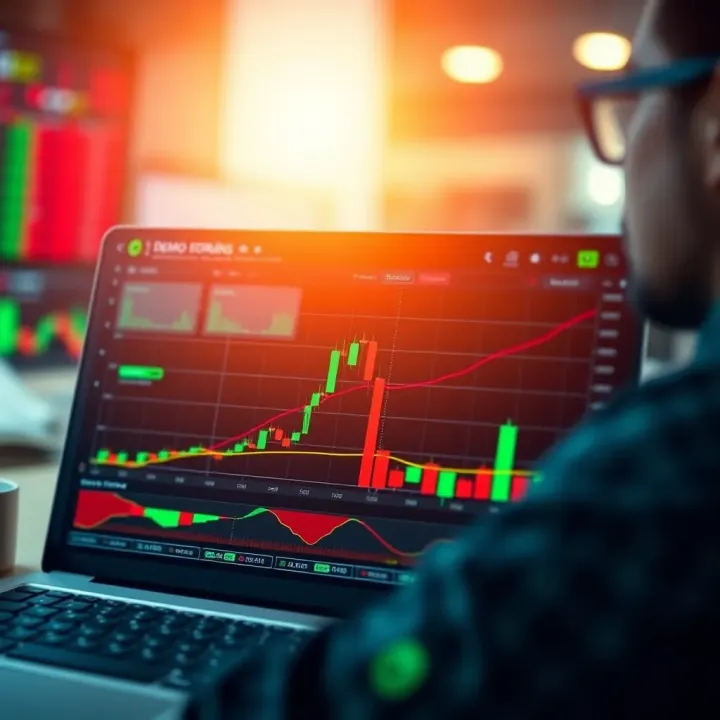
📊 Discover how demo accounts help Kenyan traders practice risk-free, pick the right platform, and avoid common mistakes. Start smarter trading today!
Based on 12 reviews