
Binary Options Guide for Kenyan Traders
Explore how binary options trading works in Kenya 📊, learn key strategies, understand risks, and get tips for smarter trading decisions.
Edited By
Charlotte Hughes
TradingView charts have become a popular choice for traders and investors in Kenya looking to make smarter market decisions. Whether you're dealing with NSE equities, forex pairs, or global commodities, these charts provide user-friendly tools that help you analyse price trends clearly.
At its core, a TradingView chart displays historical and real-time price movements, helping you spot patterns that inform your next move. Unlike traditional charts, TradingView offers a variety of chart types, technical indicators, and customisation options, all accessible via a simple web platform or mobile app.
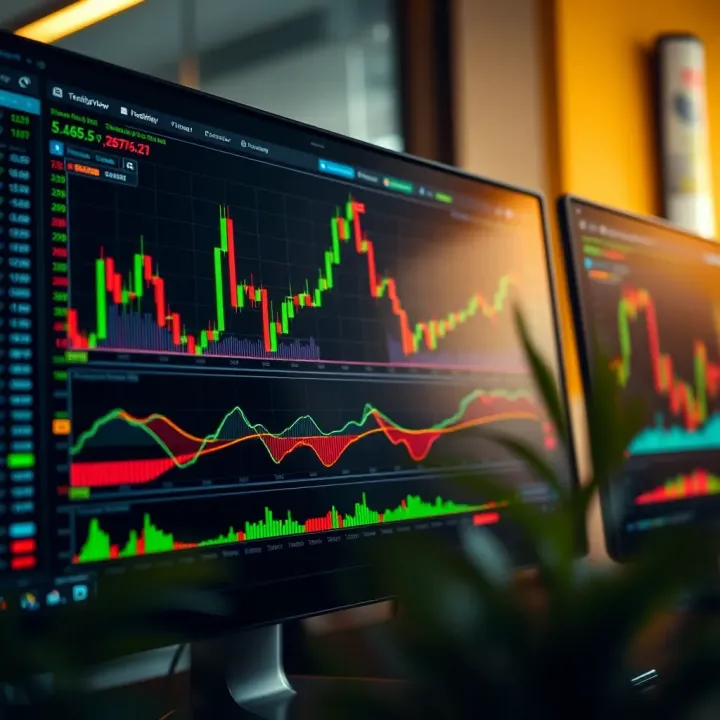
You don’t have to be a seasoned expert to start using TradingView charts effectively. With a bit of practise, you can interpret the signals and trends to guide both short-term trades and long-term investments.
For Kenyan traders, understanding how to navigate these charts can lead to better timing when buying or selling stocks, forex, or even cryptocurrencies. It’s worth noting that using local market data alongside global markets through TradingView allows you to compare performance easily.
Chart types: Candlestick, line, bar, and more. These help visualise market action differently depending on your trading style.
Technical indicators: Tools like Moving Averages, RSI (Relative Strength Index), and MACD (Moving Average Convergence Divergence) offer insight into momentum and potential reversals.
Drawing tools: Trendlines, Fibonacci retracements, and shapes let you mark support, resistance, and key price levels.
By understanding these basics, you set a solid foundation for reading complex charts and making confident trades. In the following sections, we will break down each component to help you master TradingView in a Kenyan context.
TradingView charts serve as the backbone for traders looking to understand market trends clearly and make informed decisions fast. For Kenyan traders, this overview is crucial because it sets the stage for using the platform’s tools effectively, helping you spot opportunities and manage risks. Whether you’re following NSE stocks or forex pairs like USDKES, TradingView offers a solid visual base.
Platform features: TradingView is popular for its user-friendly interface that combines real-time data, customisable charts, and an extensive suite of tools in one place. It lets you apply various technical indicators, draw trendlines, and receive alerts, all from the same screen. For example, if you want to track Safaricom shares or oil prices, you can do so alongside global markets without switching apps. This streamlines your workflow and saves time, especially when market moves need quick reactions.
Market coverage including stocks, forex, and commodities: The platform covers a wide range of assets, including Kenya’s Nairobi Securities Exchange (NSE) stocks, popular forex pairs, and global commodities like gold and crude oil. This broad coverage matters because Kenyan traders often diversify beyond local stocks into forex and commodities for better risk balance. Say you’ve noticed a dip in maize prices, you can check related commodity trends right on TradingView to decide if it’s time to enter the market or stay cautious.
Accessibility through mobile and web: One reason Kenyan traders lean on TradingView is its easy access on both mobile and desktop. Many Kenyans rely on smartphones for financial activities due to convenience and data costs. The TradingView app works well even on limited data, allowing you to check charts or set alerts while on the go. For instance, you can monitor NSE stocks before boarding your matatu or while waiting at a kiosk, making trading fit into busy daily lives.
Integration with local market instruments and global markets: TradingView blends local and international markets smoothly. It allows you to view Kenyan market instruments like NSE 20 shares alongside global forex pairs or US tech stocks. This integration matters since many Kenyan traders follow international trends that influence local markets, such as how the dollar’s strength might affect the shilling or import costs. Connecting these dots in one platform sharpens your trading edge without juggling multiple sites.
TradingView’s combination of wide market coverage, practical tools, and easy access makes it a favourite among Kenyan traders who want to stay connected and make smarter decisions, no matter where they are.
Charts form the backbone of any market analysis, and TradingView offers several types tailored to different trading styles. Knowing the main types helps Kenyan traders to pick the right tools for their decisions, especially when dealing with stocks, forex, or even commodities. Each chart type displays price data in unique ways, reflecting market sentiment or trends differently. Understanding these differences can sharpen your analysis and help avoid costly mistakes.
Candlestick charts are probably the most used chart style on TradingView. Each candle shows four key prices: the opening, closing, highest, and lowest within a set time frame. For example, a 1-hour candlestick for Safaricom shares reveals the price movement during that hour. Reading these candles helps you see whether buyers or sellers dominated the market.
Common patterns like the 'hammer' or 'shooting star' give clues about possible reversals. A hammer usually signals a bullish reversal after a downtrend, indicating buyers are stepping in. Conversely, a shooting star suggests selling pressure might soon push prices lower. Kenyan traders often rely on such patterns when timing entries or exits, especially in volatile segments like forex or NSE shares.
Line charts simplify price action by connecting closing prices with a continuous line. Unlike candlesticks, they don’t show highs or lows, making them easier to read at a glance but less detailed. This can be helpful if you want to track the general trend of an asset without getting caught up in short-term noise.
Bar charts, on the other hand, resemble candlesticks but use bars to display the same price points (open, high, low, close). They're visually less detailed but can highlight price range and volatility. Traders might prefer line charts for a quick overview, while bar charts suit those who want a simpler alternative to candlesticks.
Heikin Ashi charts smooth out price fluctuations by averaging data, making trends clearer and reducing “market noise”. This style is quite useful for Kenyan traders who find candlestick charts too choppy. For example, during a volatile session on forex pairs like USD/KES, Heikin Ashi can help identify sustained trends more easily.
Renko charts focus on price movement rather than time, drawing a block (or brick) only when prices move a set amount. This removes minor fluctuations and highlights bigger trends. If you want to avoid distractions from small price changes, Renko charts might help, especially for commodities like coffee or oil.
Point & Figure charts ignore time altogether and track price changes exceeding a certain threshold, marking columns of Xs and Os for rises and falls. This long-term view suits traders analysing asset strength without the noise of daily price swings, making it practical for Kenya-based investors focusing on steady growth over speculation.
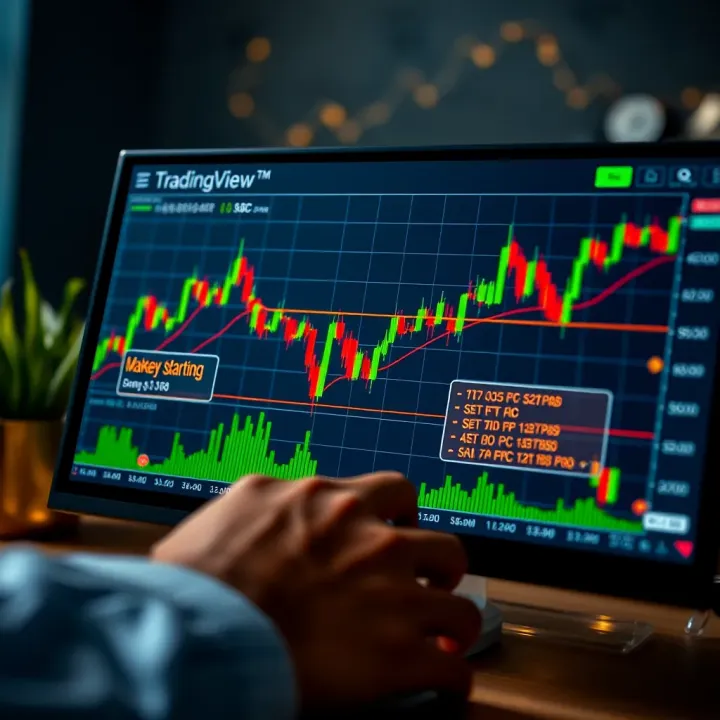
Each chart type offers a unique lens on the market. Choose wisely based on your trading style, asset, and the kind of information you need to see. The right chart can save you from chasing false signals or missing big moves.
Technical indicators are essential tools for traders aiming to make informed decisions based on market data. On TradingView, these indicators go beyond simple price charts and help you identify trends, momentum, and possible reversals. For Kenyan traders who might face market volatility or trade across different time zones, using technical indicators sharpens analyses and makes trading less of a guessing game.
Moving averages smooth out price data to highlight trends more clearly. Common types include the Simple Moving Average (SMA) and Exponential Moving Average (EMA). Kenyan traders often use a 50-day or 200-day moving average to spot longer-term trends in NSE stocks or even forex pairs like USD/KES. For example, when the price crosses above the 50-day EMA, it may signal a buying opportunity; crossing below could indicate a sell signal.
RSI measures how fast and how far prices have moved over a set period, usually 14 days. It ranges from 0 to 100, signalling whether a stock is overbought (above 70) or oversold (below 30). This is particularly handy for picking entry or exit points. Imagine a Nairobi trader watching Safaricom shares: if RSI hits 80, it might be time to take profits since the stock could be due for a pullback.
MACD combines moving averages to reveal momentum shifts. It uses two EMAs (typically 12 and 26 days) and a signal line (9 days). When the MACD line crosses above the signal line, it may suggest a buy, and vice versa. Kenyan investors trading commodities like tea or coffee futures can use MACD to time their trades better, especially during price swings caused by seasonal factors.
TradingView allows you to tweak indicator settings for different market conditions. For instance, a Kenyan forex trader might shorten the RSI period from 14 to 7 to catch quicker price changes on the USD/KES pair throughout a busy day. Customising parameters helps you adapt tools to your trading style or the asset’s behaviour rather than using one-size-fits-all settings.
Using multiple indicators together reduces false signals. For example, a trader might wait for both the RSI to show oversold conditions and a MACD crossover before buying a stock on the NSE. This combination lowers risks compared to relying on a single indicator. For Kenyan traders juggling limited time or data, this strategy improves accuracy and confidence in their trades.
Effective use of technical indicators on TradingView can boost your trading success by clarifying market moves and supporting better timing for buys and sells.
In summary, understanding and customising popular indicators like Moving Averages, RSI, and MACD gives Kenyan traders practical insights that matter. Combining these tools wisely helps manage risk and spot opportunities that might otherwise be missed.
Drawing and analysis tools on TradingView are indispensable for traders looking to make sense of price movements and market trends. These tools allow you to visually mark key points and patterns on your charts, making it easier to spot trading opportunities or potential pitfalls. For Kenyan traders especially, where market access and real-time data may sometimes be limited, these visual aids help clarify when to buy, sell, or hold an asset.
Trendlines are straight lines drawn on charts to connect a series of price points, usually highs or lows, revealing the direction of the market trend—be it upwards, downwards, or sideways. Kenyan traders use these to understand the general movement direction of stocks or currencies on the NSE or forex markets. Support lines indicate price levels where an asset consistently stops falling, while resistance lines mark levels where prices tend to pause or reverse. For instance, a trader tracking Safaricom stock might draw a support line at KSh 30 to note a floor price that the stock tends to hold. Identifying these levels helps you predict future price movements and decide when to enter or exit trades.
Fibonacci retracements are horizontal lines that indicate where support and resistance are likely to occur based on the Fibonacci sequence. Kenyan traders can use these to estimate potential reversal levels after a strong price move, especially with commodities like coffee or tea futures, which can be volatile. For example, if the price of coffee spikes sharply, Fibonacci retracement levels help you identify where a pullback might slow down or reverse, guiding when to buy back in. This tool is practical when combined with trendlines, offering a more nuanced picture of market behaviour.
Price alerts on TradingView notify you when an asset hits a specific price point, saving you from constantly monitoring charts. For traders based in Nairobi or Kisumu managing portfolios via local brokers, setting price alerts on major NSE stocks like Equity Bank or Kenya Airways helps you react quickly to market changes without spending all day glued to the screen. Alerts can be customised to trigger on price breaks, indicator changes, or volume spikes, giving you control over how and when to act.
Watchlists help you track multiple assets in one place so you don’t miss out on important market moves. By organising your watchlist into categories — such as forex pairs, NSE stocks, or commodities — you can streamline your analysis and spot emerging opportunities faster. Kenyan traders often include popular counters like Safaricom, KCB, and floriculture shares in watchlists, alongside currency pairs like USD/KES. Using watchlists effectively means you focus on the markets that matter most to your trading strategy, saving time and reducing information overload.
A well-organised watchlist coupled with timely alerts lets you stay ahead without constant chart-watching, which is key given the busy, often unpredictable trading environment in Kenya.
Using these drawing and analysis tools properly makes trading more systematic and less about guesswork. They help to translate raw price data into clear signals suited to your trading style and local market conditions.
TradingView offers a wealth of tools, but Kenyan traders face unique challenges, such as data costs and linking local financial services. Practical tips help you make the most of the platform while managing these realities effectively. These pointers focus on optimising resources like mobile data, integrating local brokerages, and leveraging payment methods such as M-Pesa.
With most Kenyan traders relying on mobile devices and sometimes limited internet, it's wise to adjust TradingView settings for lower data consumption. For example, turning off unnecessary chart animations or reducing the number of indicators displayed can save significant bandwidth. Switching to simpler chart styles like line charts rather than candlesticks also cuts down data usage without losing essential information.
Offline chart viewing adds a layer of convenience, especially in areas with unstable connectivity. Though TradingView primarily works online, traders can take snapshots of important charts or use third-party apps that cache charts for offline analysis. This way, you can keep studying market trends during power outages or in remote places without constant internet access.
Many Kenyan brokers now support integration with TradingView, allowing you to execute trades directly from the chart interface. Brokers such as Nabo Capital and AIB-AXYS provide APIs that connect to TradingView, making order placements and real-time monitoring straightforward. Using these connections streamlines your trading workflow by cutting down the need to switch platforms constantly.
TradingView combined with M-Pesa payments simplifies funding your brokerage accounts. Although TradingView itself doesn’t handle payments, many Kenyan brokers accept deposits through M-Pesa Lipa Na M-Pesa or Paybill numbers linked to accounts. This setup means you can fund your trading account quickly from your phone, avoiding bank queues or delays. Staying on top of payment processes ensures you never miss out on timely trade executions due to funding issues.
Efficient data use and seamless broker linkage are key to thriving with TradingView in Kenya’s trading scene. Adjust settings smartly and link your accounts to work smarter, not harder.
By keeping these tips in mind, Kenyan traders can enjoy TradingView’s advanced tools without the frustrations of heavy data demands or disconnected broker accounts. These practical steps help you stay focused on the market instead of the technical hassles.
While TradingView offers powerful tools for charting and market analysis, Kenyan traders often face challenges that can trip them up if not handled properly. Understanding these difficulties and how to address them is vital for building confidence and making informed decisions. Two common areas where traders get stuck are managing market hours and time zones, and dealing with the overwhelming amount of data and indicators available. Handling these issues carefully helps you maintain focus and avoid costly mistakes.
Kenyan traders work on East Africa Time (EAT), which is UTC+3. On TradingView, charts will often default to different time zones based on the exchange or global market you are viewing. It is important to set your TradingView account or individual charts to EAT to keep track of price movements accurately during your trading day. This adjustment helps align your analysis with local trading hours, especially for NASDAQ or NSE stocks.
Without this setting, you might mistakenly think a market is closed or open, leading to poor timing decisions. For example, if you are trading the NSE or even international forex from Nairobi, syncing your chart times with EAT stops confusion about when price actions or volume spikes really happen. Always check your chart’s time zone in the settings and reset to EAT if it’s showing something else.
Trading global markets means you deal with exchanges across different time zones. Understanding market hours for places like New York, London, or Tokyo is crucial. When coupled with EAT, these differences can make it tricky to know when the best opportunities arise or when news will impact prices.
A good practice is to have a clear market hours calendar for key international exchanges alongside your TradingView charts. This way, you know when liquidity is highest, such as during the London-New York overlap, which influences forex pairs like USD/KES or EUR/USD. Being aware also prepares you for after-hours price moves that may affect your Kenyan investments if you follow multinational companies listed abroad.
One trap many traders fall into is loading too many technical indicators on the same chart. This can create confusing signals and slow down decision-making. Instead, focus on a handful that suit your trading style and the asset class. For Kenyan traders, popular indicators like Moving Averages, RSI, and MACD offer clear insights without clutter.
Remember, the goal is clarity, not complexity. For example, use a 50-period Moving Average to spot trend direction, and RSI to identify overbought or oversold conditions, rather than stacking multiple oscillators that contradict each other. This approach saves your data and mental bandwidth, especially if you trade using limited mobile data on the go.
Having a solid trading plan is your best defence against random decisions fueled by too much information. This means setting clear entry, exit, and stop-loss rules based on your preferred setups and indicators. When your plan is ready, stick to it even if real-time charts show tempting signals outside your strategy.
For instance, if your strategy calls for trades only during NSE regular market hours, avoid chasing price action early in the morning or late at night when volatility spikes but unpredictability is high. Consistency builds discipline and reduces the emotional swings that come from reacting to every price tick.
Overloading on data and ignoring local market timing are some of the biggest pitfalls Kenyan traders face. Staying focused on key indicators and syncing times to East Africa Time keeps your trading grounded and effective.
By managing time zones wisely and selecting just the right indicators, you gain control over your TradingView experience and sharpen your ability to take smart trades.
Explore how binary options trading works in Kenya 📊, learn key strategies, understand risks, and get tips for smarter trading decisions.
Explore how Kenyan traders can open and manage a Deriv real account 🚀 with tips on verification, funding, and trading securely on reliable platforms 💼📈.
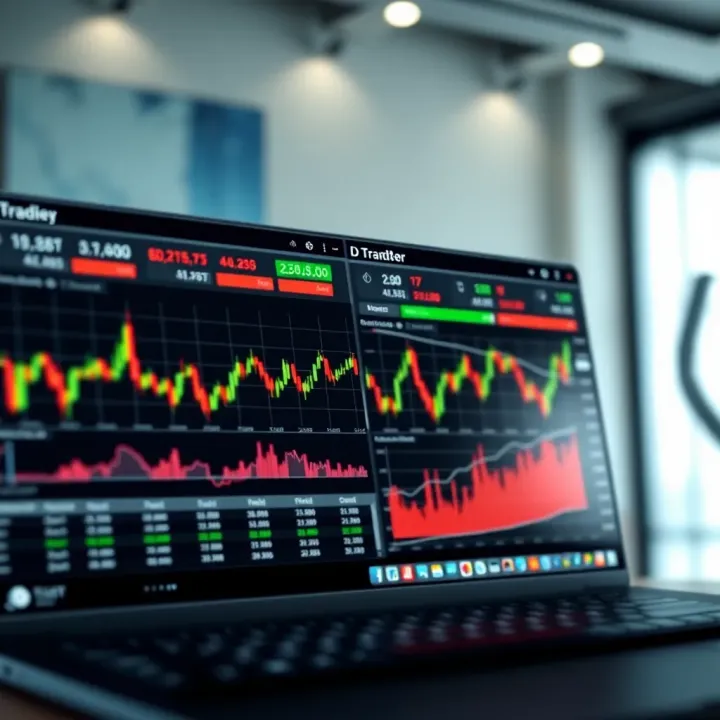
📈 Discover how Kenyan traders can set up, use key tools, and apply strategies on D Trader for smarter trading and effective risk management.
Discover how Binary.com bots work, their benefits, risks, and setup tips for traders in Kenya 🇰🇪. Learn practical strategies and the ethics of automated trading 🤖📈.
Based on 10 reviews