
Understanding Demo Trading Accounts in Kenya
Learn how to use demo trading accounts effectively 🇰🇪. Practice trading in Kenya without risk, master strategies, and prepare to trade live with confidence 📈💡.
Edited By
Henry Wilson
When venturing into forex trading, understanding margin is key. Margin is essentially the amount of money a trader has to put down as a guarantee to open and keep a position active in the forex market. Think of it as a security deposit – without it, you can’t effectively trade larger sums.
Margin is not the full cost of the trade. Instead, it allows you to control a bigger position than your available cash would normally allow. For example, if you want to buy $100,000 worth of a currency pair but your broker requires a 1% margin, you only need to have $1,000 as margin. The rest is effectively provided by the broker through leverage.
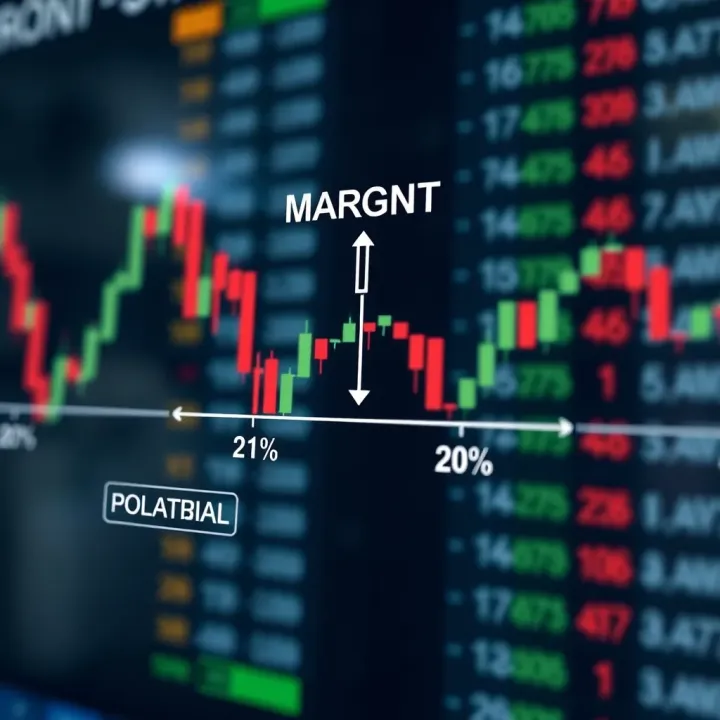
In Kenya’s forex scene, traders often leverage margin to increase exposure. However, this comes with added risk that must be carefully managed.
Margin differs from leverage, though the two are closely related. Leverage is the ratio of the full trade size to the margin you deposit. A 1% margin corresponds to 100:1 leverage. If the position moves against you, losses are magnified just like gains. This can quickly deplete your margin and trigger a margin call, where the broker demands more funds or closes your position.
Understanding margin requirements is crucial. These vary by broker and the currency pairs you trade. Major pairs like EUR/USD usually require lower margins, meaning higher leverage, while exotic pairs might demand higher margins due to their volatility.
In the Kenyan context, forex brokers regulated by the Capital Markets Authority (CMA) often specify margin levels clearly on their platforms. It’s wise to confirm these before committing funds to avoid surprises.
Margin is the minimum collateral to open a trade.
It enables traders to control larger positions with less cash.
Margin requirements depend on the broker and currency pair.
Using margin increases both potential profits and losses.
Insufficient margin leads to margin calls or automatic position closure.
Managing margin involves not just meeting requirements but also monitoring your positions closely. Kenyan traders should use risk management tools like stop-loss orders to protect their margin and avoid costly mistakes.
Margin in forex is powerful but must be handled responsibly, especially in Kenya’s dynamic market influenced by local economic factors and currency movements. Knowing how margin works gives you an edge to trade more confidently and avoid costly pitfalls.
Margin is a key concept every forex trader should understand before making any trade. Simply put, margin is the amount of money a trader needs to set aside as collateral to open and maintain a position. It is not the cost to buy the currency pair outright but rather a fraction of the total trade value. For example, if you want to control a position worth KSh 100,000 with a 1% margin requirement, you only need KSh 1,000 in your account as margin.
Margin is like a security deposit – it acts as a guarantee that you can cover potential losses. It allows you to open larger trades than the money you physically own in your trading account. This concept is crucial because forex trades often involve big amounts of currency, and the margin lets you control large sums without committing the full value from your wallet.
Without margin, trading forex would require huge capital, out of reach for many traders. Margin unlocks the possibility to trade by restricting only a small percentage of the full position. This helps Kenyan traders, for instance, tap into global currency markets using their local savings. If you have KSh 10,000, margin might let you control a position worth KSh 1 million with the right leverage. But remember, while it boosts potential profits, it also magnifies possible losses.
It’s important to distinguish between your margin and your account balance. Your account balance is the total cash available, including profits and losses from all open and closed trades. Margin, however, is a portion of this balance that your broker holds to keep your trades open. If your account balance drops too close to the margin level, the broker may issue a margin call to prevent further losses.
Margin acts like a safety net between your trades and your capital. Managing it carefully helps avoid getting a margin call or losing your entire deposit.
In Kenyan forex trading, where market volatility can be high, understanding how much margin you need—and how it relates to your available funds—is critical. Always monitor your margin levels closely to keep your trading sustainable and avoid unexpected liquidations.
In forex trading, margin and leverage go hand in hand. Margin is the deposit you put up to open a trade, but leverage allows you to control a bigger position size using that margin. This connection lets traders in Kenya access larger markets without having to commit the full trade amount themselves.

Leverage is basically a loan from your broker that magnifies the amount of capital you can trade with. For example, if your broker offers a leverage of 100:1, it means you can control KS00,000 worth of currency with only KS,000 as margin. The margin acts as collateral to secure this loan. So, the higher the leverage, the less margin you need to open a position.
However, using high leverage means higher risk, because profits and losses get amplified equally. When trading on margin, a small shift in the currency price can lead to big gains or big losses relative to your initial margin. That’s why understanding this relationship is key to managing your funds effectively.
Suppose you want to buy 1 standard lot (100,000 units) of USD/KES. The current price is 110 KSh per USD. Without leverage, you'd need KS1 million to buy the lot outright.
If your broker offers 100:1 leverage, your margin requirement would be just 1% of the total trade value — that is KS10,000. This means you only need to have that amount in your account to open the position.
Now imagine the USD/KES rate moves up from 110 to 111. That 1 shilling increase means your 100,000 units position is now worth KS11 million, so your profit would be KS00,000, nearly doubling your margin.
On the flip side, if the price drops by 1 shilling to 109, you’d lose KS00,000. That’s why disciplined risk management comes in; you must monitor margin levels actively and be ready to close positions before losses erode your margin completely.
When trading on leverage, small price moves matter a lot — use stop loss orders to protect your margin.
By combining margin and leverage thoughtfully, forex traders in Kenya can trade efficiently with limited capital. Still, the key is to strike a balance between taking advantage of leverage and controlling risks by keeping an eye on margin requirements consistently.
Knowing margin requirements and margin calls is crucial for any trader in the forex market. Margin requirements determine the minimum amount of collateral you must hold to open or keep a position. Ignoring these rules can quickly lead to forced position closures or big losses. Kenyan traders especially need to understand this, as local brokers often set margin levels based on regulatory guidelines and market volatility.
Margin requirements in forex trading usually range from 1% to 5% depending on the currency pair and broker's policy. For example, to trade a standard lot of 100,000 units with a 1% margin requirement, you would need to put up KSh 100,000 as collateral. More volatile pairs like GBP/JPY often have higher margin requirements due to their risk. Kenyan brokers licensed by the Capital Markets Authority (CMA) may also adjust margins to reflect regional market conditions and regulatory standards.
A margin call occurs when your account equity falls below the broker's required minimum margin level. Essentially, the broker asks you to top up your account or close some positions to reduce risk. Imagine you started with KSh 50,000 margin, but losses bring your equity down to KSh 20,000 while the required margin is KSh 25,000; the broker will issue a margin call. If you don’t respond quickly, the broker might start closing your losing positions to protect both your account and themselves from further loss.
Margin calls are not just technical warnings; they reflect real financial pressure that can turn your trading account negative if not managed well.
Good margin management and risk control can help prevent margin calls. Here are practical steps:
Use appropriate leverage: Avoid maximum leverage; one-third or half of the maximum is safer for most traders.
Monitor your margin level: Kenyan traders should check available margin regularly, especially during volatile market hours.
Set stop-loss orders: These can limit losses and prevent your equity from falling too low.
Keep some cash reserve: Don’t use all your funds as margin; leaving some capital free helps cushion against sudden moves.
Trade smaller volumes: Adjust your trade size to fit your account balance and margin capacity.
By understanding margin requirements and handling margin calls properly, you safeguard your trading capital and can maintain control even when markets move against your positions. This awareness is particularly vital in Kenya’s forex market, where volatility can spike during global economic events or local political developments.
Trading on margin in the forex market offers opportunities but also exposes traders to significant risks. Understanding these risks and benefits is essential, especially for Kenyan traders navigating a market that can shift quickly due to global events and local economic factors.
Using margin allows you to control larger positions with a smaller amount of capital. For example, a margin requirement of 1% means you can hold KSh 1 million worth of currency with just KSh 10,000 in your account. This leverage can multiply profits when the market moves in your favour. Additionally, margin trading provides flexibility to diversify across multiple currency pairs without needing full capital upfront. This can be particularly useful in volatile times when opportunities arise suddenly.
Besides boosting potential returns, margin enables quicker entry and exit from trades, helping traders react to events like CBK policy announcements or unexpected price swings. Kenyan traders can also use margin strategically in short-term trades to capture small price movements while tying up less capital.
On the flip side, trading on margin amplifies losses just as much as gains. A small adverse move can quickly erode your account balance. For instance, if you held a KSh 1 million position on margin and the market moved 1% against you, you’d lose KSh 10,000 — your entire margin if not carefully managed. When losses near your margin deposit, brokers might issue a margin call demanding more funds or automatically close positions at a loss.
Margin trading also increases exposure to market volatility. Unexpected news or political developments in Kenya or abroad can trigger sharp currency swings, putting leveraged positions at risk. Without proper control, margin can lead to rapid and significant losses, wiping out a trader’s capital.
Managing risk while using margin is non-negotiable. Setting stop-loss orders and take-profit targets can limit losses and lock in gains automatically, reducing emotional decision-making. For example, if you buy USD/KES on margin at 110 and set a stop-loss at 108, your loss per unit is capped.
Regularly monitoring your margin level helps avoid margin calls by allowing you to adjust positions early. Many Kenyan traders use trading journals to track margin use, leverage levels, and how trades perform under different conditions.
Choosing moderate leverage suited to your experience and risk tolerance is vital. Beginners should avoid high leverage that can wipe their investment quickly, while more advanced traders might carefully increase leverage with strict risk controls.
Margin trading offers a chance to increase returns but demands discipline, constant vigilance, and clear strategies to manage the risks effectively.
In summary, trading forex on margin opens doors to higher profits and more active market participation. However, it comes with higher exposure to losses. By understanding these risks and benefits and practising sound risk management, Kenyan traders can participate confidently in the forex market without jeopardising their capital.
Managing margin effectively is key to staying afloat and profitable in forex trading. Without good discipline and the right strategies, traders risk losing more than they expect. Practical tips help you control the margin you use, avoid margin calls, and protect your capital in Kenya’s dynamic forex environment.
Selecting appropriate leverage is the first step in managing margin. While higher leverage lets you control bigger positions with less money, it also magnifies losses if the market moves against you. For example, if you use 1:100 leverage on a position worth KSh 1 million, your required margin is just KSh 10,000. However, a small market shift can wipe out your margin quickly.
It’s better to start with low to moderate leverage, perhaps 1:10 or 1:20, especially if you’re new to forex. This approach limits your exposure and makes it easier to manage your trades. Experienced traders may handle higher leverage but always with a solid risk management strategy.
Keeping an eye on your margin level is crucial. Your margin level shows the ratio between your equity (account balance plus or minus open trade profits or losses) and used margin. Monitoring it helps you avoid margin calls, which occur when your margin level falls below the broker’s required threshold.
A practical habit is to check your margin level daily or even multiple times a day during volatile markets, such as when the Kenyan shilling reacts to CBK announcements or global currency shifts. Most trading platforms display margin level clearly, so use this to keep tabs on your position strength.
Setting stop loss and take profit orders provides a safety net. A stop loss limits how much you lose on a trade by automatically closing it at a set price, preventing your losses from eating into your margin. Conversely, take profit locks in gains when the price hits your target, helping you secure profits and free up margin.
Consider a trader opening a USD/KES position. By placing a stop loss 50 pips below the entry price and a take profit 100 pips above, they manage risk and define clear exit points. This practice also keeps your emotions in check by sticking to predetermined plans rather than reacting impulsively.
Regular and disciplined management of margin through these tips helps traders stay in control, reduce unnecessary losses, and trade confidently in Kenya’s forex market.
Overall, working with the right leverage, monitoring your margin closely, and using protective orders are practical ways you can manage margin effectively. These steps reduce your chances of surprises and keep your forex trading on a sustainable path.
Learn how to use demo trading accounts effectively 🇰🇪. Practice trading in Kenya without risk, master strategies, and prepare to trade live with confidence 📈💡.

Explore how binary trading platforms work in Kenya 🇰🇪, key features, trade types, risks, regulations, and smart strategies to boost your success 📈.
Explore how Deriv Bot works, setup tips, smart strategies, and risk management for trading in Kenya. Get practical advice to trade confidently with Deriv Bot 🤖📈🇰🇪
Explore how forex bot trading works in Kenya 🇰🇪: understand automated strategies, tech details, benefits, risks, and tips to match your trading goals 📈🤖.
Based on 14 reviews