

Understanding the Commitment of Traders Report
📊 Discover how the Commitment of Traders Report reveals market positions and helps Kenyan traders make smarter, data-driven decisions in financial markets.
Edited By
Matthew Hughes
The volatility index—often known as the "fear gauge"—reflects how much the stock market is expected to swing over a short period. This index measures market uncertainty by tracking the pricing of options on stock indices, such as the S&P 500. For Kenyan investors and traders, understanding the volatility index is key to gauging investor sentiment and anticipating market behaviour.
In simple terms, a high volatility index signals nervousness in the market, meaning investors expect large price changes—either up or down. Conversely, a low index implies calm, suggesting steady or predictable market conditions. This insight can help you manage risks when investing in the Nairobi Securities Exchange (NSE) or when following global markets that influence the Kenyan economy.

The index uses the prices of options, which are contracts giving the right—though not the obligation—to buy or sell stocks at a set price in the future. When option prices rise, it reveals heightened demand for protection against price swings. The volatility index then translates this demand into a percentage, approximating expected market movement over the coming month.
Risk Assessment: If the volatility index jumps, it may be time to adjust portfolios, perhaps by shifting investments into safer assets like government bonds or money market funds.
Market Timing: Traders seeking to buy low and sell high watch the index closely. When the index spikes, it might indicate an oversold market, signaling a buying opportunity after panicked selling.
Hedging Strategies: Kenyan businesses exposed to exchange rate fluctuations or interest rate risks can use volatility insights to decide when to hedge.
"The volatility index offers a window into how investors feel about the market's future. It's not about predicting the exact movements but understanding the mood and preparing for possible turns."
Unlike price-based indicators such as moving averages, the volatility index focuses on expectations rather than past performance. While Nairobi's NSE 20 share index reflects current prices, the volatility index reveals how much those prices might jump around soon. Using both offers a fuller picture of market dynamics.
Through this lens, Kenyan investors and financial advisors can make more informed decisions, combining local market knowledge with global signals to navigate uncertainties smarter.
The Volatility Index offers investors and traders a snapshot of expected market fluctuations within a set period, usually 30 days. Rather than showing actual price changes, it estimates how wildly prices might swing based on current market data. This helps market participants prepare for possible risks or opportunities ahead. For instance, if the index signals high expected volatility, an investor might take precautionary measures such as diversifying their portfolio or using hedging strategies.
The Volatility Index essentially sums up market predictions about how much prices are likely to move, up or down. It is derived mainly from the prices of options contracts, which let traders bet on potential price swings rather than direction. If traders pay more for these options, it suggests they anticipate greater turbulence ahead. This expected volatility acts like a weather forecast for the market’s risk climate.
Globally, the best-known volatility gauge is the VIX, which measures expected fluctuations in the S&P 500 index over the next month. Investors use it to judge overall market stress or calm. While Kenya’s Nairobi Securities Exchange (NSE) does not yet have an official volatility index, international investors often look to the VIX as a benchmark. Understanding how such indices work gives Kenyan traders a useful tool for comparing local market mood against global trends.
A rising volatility index often signals increasing nervousness or fear among investors. During crises—like financial crashes or geopolitical shocks—volatility spikes because traders expect bigger price swings. This fear can cause a rush to safer assets or a sell-off frenzy. For example, when the global COVID-19 pandemic hit, the VIX surged, reflecting widespread panic that rattled markets worldwide.
Investors watch volatility indices closely because they capture emotional undercurrents in the market that price charts alone might miss.
Conversely, low volatility readings generally point to stable, confident markets where investors expect gentle price movements. This encourages more buying and longer-term investing. However, unusually low volatility can also foreshadow complacency, which might precede sudden market shocks. Understanding these dynamics helps you gauge whether the environment favours risky bets or calls for caution.
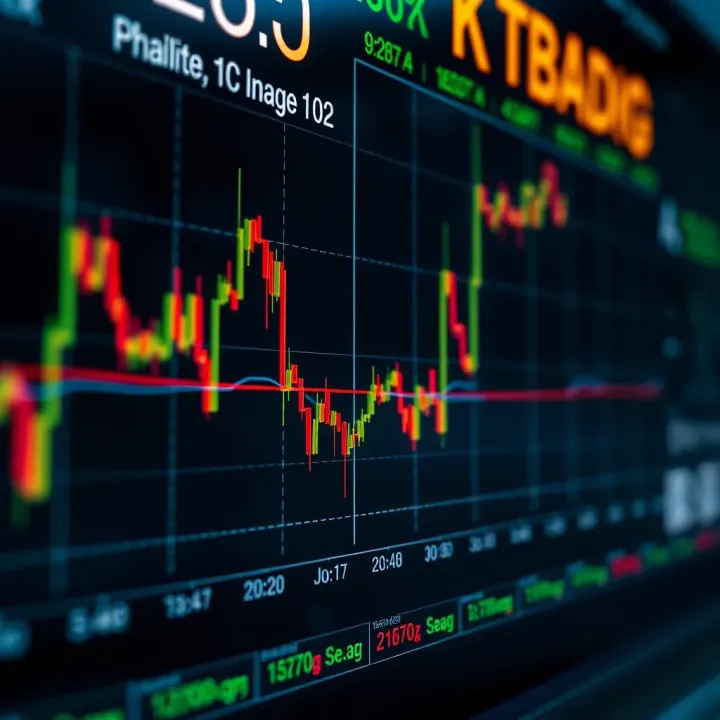
Kenyan investors can learn from these signals by monitoring related global volatility measures or emerging local alternatives. Doing so sharpens decision-making amid regional events, fluctuating commodity prices, and broader economic changes.
Calculating the volatility index offers traders and investors a quantifiable way to gauge expected market swings. For Kenyan investors especially, understanding this calculation helps interpret market signals without relying purely on price movements or news headlines. The index reflects market expectations about future price changes over a specific timeframe, often the next 30 days, which informs decisions like timing trades or adjusting portfolio risk.
The volatility index mainly uses options prices on underlying assets, such as the S&P 500 in global markets. Options, contracts granting the right to buy or sell at set prices in the future, embed the market’s outlook on price uncertainty. By observing prices of call and put options across various strike prices and maturities, the index estimates expected volatility. This approach differs from simply looking at past price changes; it focuses on what traders anticipate will happen, which is often more useful for decision-making.
For example, when options premiums rise for near-term expiration dates, it suggests traders expect bigger price swings soon. This rise feeds into the calculation of the volatility index, pushing it higher. Kenyan investors dealing with NSE stocks may not always find a directly calculated volatility index, but similar principles apply when assessing options or derivative prices for tallies of market uncertainty.
Implied volatility plays a central role here. It is the market’s forecast of a security’s volatility embedded within the option’s price. Unlike historical volatility, which looks back at past price movements, implied volatility projects future fluctuations. A higher implied volatility means options are expensive due to expected large price variations. The volatility index aggregates these implied volatilities from a broad set of option prices to produce a single figure representing overall market nervousness.
This makes implied volatility a powerful tool: rather than guessing from price charts alone, you get an estimate derived from actual traded contracts reflecting real market sentiment. For traders planning to hedge portfolios or speculate on market direction, tracking changes in implied volatility gives early warnings before price moves happen.
High values on the volatility index suggest the market expects sizeable price changes soon, often linked to uncertainty or fear. For instance, during periods of political unrest, economic shocks, or global crises, volatility spikes as traders rush to protect positions or speculate on outcomes. Conversely, low index values indicate calm markets with fewer expected swings, which might encourage more confident investment behaviour.
Practical use of this understanding helps Kenyan investors decide when to tighten risk controls or seize buying opportunities. For example, when the index rises sharply, it could signal a good time to reduce exposure or use hedges such as options or volatility products. When the index is low, markets tend to be steady, and investors may take on more risk with less worry.
Typical volatility levels depend on the market context. In stable times, values might hover around 12 to 20. However, during stressful events, they often climb beyond 30 or even higher, showing intense unease. Comparing these ranges over time allows investors to benchmark their risk tolerance and adapt accordingly. While Kenya’s Nairobi Securities Exchange may not display a dedicated volatility index like the VIX, understanding these concepts can help traders interpret global signals alongside local market trends.
The volatility index provides a real-time snapshot of market expectations, and knowing how to calculate and interpret it offers an edge in managing your investments wisely, especially in uncertain environments.
Understanding how the index is calculated and how to read its values arms you with a grounded approach to market sentiment—quite useful when the Nairobi market reacts to both local and international events.
The volatility index serves as an essential tool for investors and traders to navigate financial markets more confidently. It provides insights into the expected price fluctuations, helping market participants manage risk and make informed decisions about when to enter or exit positions. By understanding the Volatility Index, investors, including those trading Kenya's NSE stocks, can adapt their strategies to shifting market moods and protect their portfolios against unexpected shocks.
Volatility levels give investors clues about market uncertainty. When the volatility index climbs higher, it usually signals rising fear or uncertainty among traders. In such cases, investors might reduce exposure to risky assets or rebalance towards safer options like government bonds or blue-chip stocks. For example, during periods of political unrest or major economic announcements in Kenya, a rising volatility index could warn investors to tighten stop-loss limits or diversify more widely.
On the other hand, low volatility often reflects confidence and stability, encouraging investors to take on more growth-oriented positions. By monitoring these shifts regularly, investors can adjust their portfolios rather than react late to sudden market movements.
Advanced traders sometimes use derivatives pegged to the Volatility Index—such as futures or options—to hedge against market swings. These instruments gain value when volatility spikes, offsetting losses in other parts of a portfolio. For instance, a trader holding large shares in an NSE-listed firm might buy VIX futures contracts to protect against sharp downturns caused by economic shocks.
While these tools offer strong risk management, they require understanding and experience, as derivatives can amplify losses if misused. In Kenya, such products are less common but becoming more accessible through growing financial markets and brokerages offering international instruments.
The volatility index reveals turning points in market sentiment that price charts alone may miss. Sharp rises in volatility often accompany uncertainty before significant market moves. Investors who spot these inflection points early can position themselves to buy undervalued stocks or exit overbought assets.
For example, just before the last general elections, Kenyan markets experienced volatility upticks. Alert investors who noticed this could anticipate higher risks and adjust positions accordingly, avoiding heavy losses or capturing bargain buys.
Sudden volatility spikes tend to correspond with panic selling or speculative buying. While these moments might seem risky, they often create opportunities. Contrarian investors may use volatility spikes as signals to buy cheap stocks temporarily hammered down by fear.
Conversely, sustained high volatility could warn against entering the market or suggest taking profits. In practical terms, a trader might watch for extreme spikes in the Volatility Index to decide when to lock in gains or tighten stop losses, especially during uncertain periods like global economic disruptions or local crises.
Keeping an eye on the volatility index helps traders and investors not only protect their money but also pinpoint opportunities in seemingly chaotic markets.
Ultimately, the volatility index is a practical companion for Kenyan investors looking to stay ahead in markets influenced by both local and global factors. Using it wisely can sharpen risk controls and boost confidence in trading decisions.
Understanding how the volatility index compares with other market indicators helps investors and traders make more informed decisions. While price-based indicators like moving averages or Relative Strength Index (RSI) focus on price action alone, the volatility index adds a layer showing market uncertainty and fear. This distinction is vital for a clearer view of market conditions and better timing of trades.
Price-based indicators track market trends, helping investors spot directional movements or potential reversals. However, they don't directly show how much the market expects prices to swing. The volatility index fills this gap by measuring expected fluctuations, giving insight into underlying market nervousness. For example, a rising price trend with increasing volatility might signal a shaky rally that could reverse, while a steady price upturn with low volatility suggests stronger confidence.
By combining the volatility index with trend signals, traders get a fuller picture. They can spot when a trend is likely to hold or when it faces pressure from rising uncertainty. This complementarity improves risk assessment and entry or exit timing.
Volume shows how many shares or contracts change hands, while momentum indicators measure the speed of price changes. These help confirm the strength of price moves but don't reveal the fear or complacency driving market behaviour. The volatility index adds this emotional dimension.
For instance, a surge in volume coupled with increasing volatility suggests panic selling or buying, possibly signalling a market top or bottom. On the other hand, high volume with low volatility might mean steady accumulation or distribution. Momentum indicators paired with the volatility index can warn when fast price moves are about to slow or reverse due to shifts in market sentiment.
Kenya's Nairobi Securities Exchange (NSE) has a growing but still relatively modest market compared to global centres. The volatility index concepts apply well to more liquid NSE stocks like Safaricom, Equity Bank, and KCB. Traders can use volatility insights to time entries and manage risk, particularly during earnings seasons or economic news releases.
Besides equities, volatility tracking can be useful for Kenyan derivatives markets, especially as products linked to the NSE's 20 Share Index (NSE 20) develop further. Investors aiming to hedge or speculate could benefit from volatility indicators to anticipate periods of higher market swings.
However, the Kenyan market's smaller size and lower trading volumes can limit the volatility index's effectiveness. Illiquid stocks may show erratic volatility readings not reflective of broader investor sentiment. Also, the absence of a widely traded volatility futures or options market in Kenya restricts the ability to hedge directly via volatility products.
That said, Kenyan investors can still watch global volatility indices like the VIX for clues, since NSE performance often correlates with wider emerging market trends. Ultimately, it's best to view volatility indicators as one of several tools, especially given the unique characteristics of the local market.
Combining the volatility index with price, volume, and momentum indicators gives a well-rounded understanding of market conditions, particularly useful in Kenya's evolving financial landscape.
📊 Discover how the Commitment of Traders Report reveals market positions and helps Kenyan traders make smarter, data-driven decisions in financial markets.
📈 Explore the role of DB traders in financial markets, their tools, strategies, and challenges, plus how tech shapes their trading impact in Kenya and beyond.
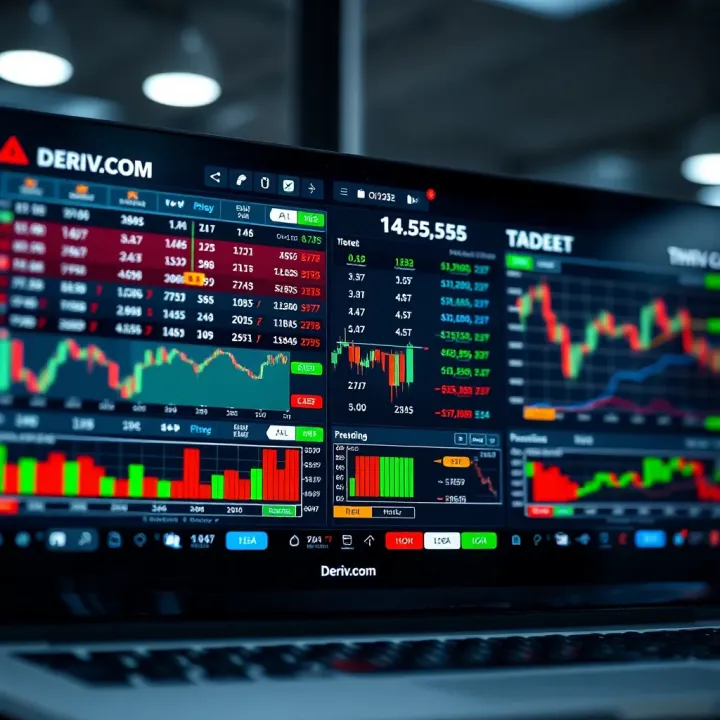
Explore Deriv.com Limited's services, regulation, trading platform, and customer support tailored for Kenya's online trading community 📊🇰🇪

Explore Deriv Limited’s trusted trading platforms, services, and regulatory status in Kenya. Gain insights into its market presence and product range 📊💼
Based on 7 reviews