

Guide to Crypto Trading in Kenya
📈 Explore crypto trading in Kenya with this practical guide! Learn strategies, market basics, risk management, and stay secure in local crypto space.
Edited By
Charlotte Evans
Fibonacci retracement levels are essential tools for traders aiming to make smarter decisions in the volatile world of financial markets. Rooted in a sequence formulated centuries ago by mathematician Leonardo Fibonacci, these levels help predict where prices might reverse or stall during pullbacks. For traders in Kenya and elsewhere, understanding how to use these retracement points can improve timing entries and exits in stocks, forex, or commodities.
At its core, Fibonacci retracement involves plotting horizontal lines at key percentages of a price move—typically 23.6%, 38.2%, 50%, 61.8%, and 78.6%. These percentages come from ratios found in the famous Fibonacci sequence, reflecting natural order observed in nature and financial markets alike. When prices retrace after a trend, these levels often act as support or resistance zones.
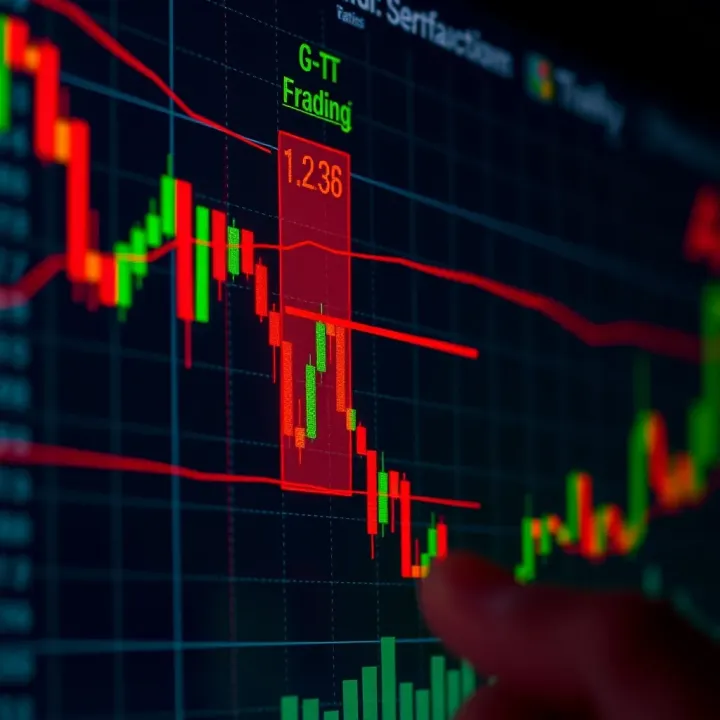
Recognising these levels gives you an edge by marking potential zones where the market could change direction, helping manage risks and spot entry points more wisely.
To calculate, identify the recent significant high and low on a chart:
Mark the highest price point (swing high).
Mark the lowest price point (swing low).
Calculate the differences and draw horizontal lines at the key Fibonacci percentages.
For example, if a stock price rose from KSh 100 to KSh 150, the 61.8% retracement level would sit roughly at KSh 119, a level where the price may find support on a pullback.
Fibonacci retracement is commonly combined with other indicators like volume, moving averages, or trendlines for stronger confirmation. For instance, if the daily chart shows a retracement near 38.2% and the volume starts picking up, that might signal a good time to enter the trade.
Traders in Nairobi or Mombasa using platforms like MetaTrader or investing through NSE brokers can take advantage of this tool by checking retracement zones on their charts before making buy or sell decisions.
Use retracement levels in the context of the overall trend, not in isolation.
Confirm with price action signals such as candlestick patterns or breakouts.
Avoid expecting exact reversals on Fibonacci lines; treat them as zones rather than fixed points.
With these insights, you can better navigate price swings and increase the chances of profitable trades by understanding where the market may slow down or bounce back.
Fibonacci retracement levels are a popular tool used by traders to predict potential support and resistance points during price movements. These levels help forecast where a price pullback might stall before continuing the original trend. In markets like the Nairobi Securities Exchange (NSE) or forex trading, knowing these levels can improve entry and exit timing, reducing unnecessary losses.
By marking key retracement points, traders gain a clearer picture of market behaviour rather than relying on guesswork or gut feelings. For example, if a stock price on the NSE has surged from KSh 100 to KSh 150, a trader might use Fibonacci retracement levels to identify prices between KSh 138 and KSh 122 as likely zones where the price could find support during a pullback.
The Fibonacci sequence starts simply: 0, 1, 1, 2, 3, 5, 8, and so on, with each number being the sum of the two preceding ones. You'll find this pattern in many natural settings—flower petals, seed arrangements in sunflowers, and even the branching of trees. In finance, these numbers translate into ratios that seem to reflect market rhythms and crowd psychology, influencing buying and selling behaviour.
A practical example in Kenya’s coffee market might be price movements that retrace approximately 38.2% or 61.8% after sharp moves, suggesting that markets often take a ‘breather’ at these points before continuing upwards or downwards.
Fibonacci retracement levels come from ratios calculated using numbers from the sequence. The most important is the 61.8% level, often called the “golden ratio,” derived by dividing one number by the next one (for example, 21 divided by 34 equals roughly 0.618). Other levels like 38.2% and 23.6% emerge from dividing numbers separated by two or three places.
These percentages help traders draw horizontal lines on price charts that act as possible reversal points. The levels guide them in spotting when price corrections might end, allowing better decisions for entry, stop-loss placement, and profit targets.
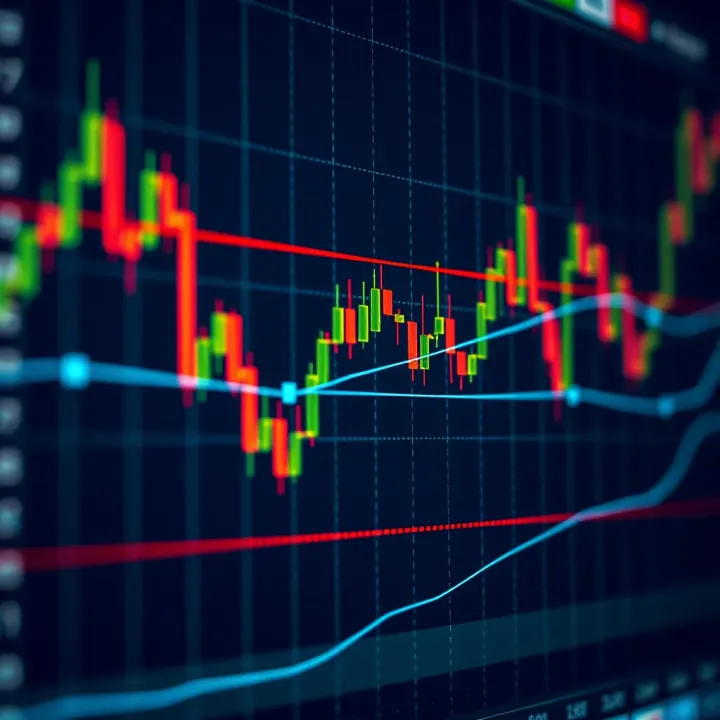
In trading, these percentages represent the depth of a price pullback relative to its previous major move. The 23.6% level signals a shallow retracement, often a minor pause before the trend continues. The 50% level, while not a true Fibonacci ratio, is widely used since markets often retrace about half before reversing.
The 38.2% and 61.8% levels are the most watched because prices often bounce or reverse near them. For example, during forex trading between USD/KES, if the price surges and then pulls back, many traders place buy orders near the 61.8% retracement, expecting the trend to pick up again.
23.6%: Indicates a light correction and often suggests strong momentum behind the prevailing trend.
38.2%: Shows moderate retracement; price may find support or resistance here before moving onward.
50%: Represents a psychological midpoint; markets often pause here even though it’s not a Fibonacci-derived ratio.
61.8%: The golden ratio; a crucial level where strong reversals often occur.
78.6%: A deep retracement implying the trend might soon reverse or enter consolidation.
These levels aren’t foolproof but offer a practical framework, especially when combined with other indicators like volume or moving averages.
Knowing what these levels mean helps traders in Nairobi or Mombasa fine-tune their strategies for local and international markets alike. Understanding them is like having a map for market twists and turns, helping you trade smarter and with more confidence.
Calculating Fibonacci retracement levels accurately helps traders identify potential price reversal points. This step is vital because it lays the groundwork for spotting support and resistance zones that enable smarter trading decisions in volatile markets like the Nairobi Securities Exchange (NSE) or forex pairs such as USD/KES. If these levels are off due to incorrect calculations or poor point selection, traders risk making costly mistakes.
Choosing the correct time frame plays a crucial role in marking swing highs and lows for Fibonacci retracement. For example, a day trader focusing on minute or hourly charts will choose different swing points compared to a swing trader using daily or weekly charts. Picking a time frame that matches your trading approach ensures the retracement levels are relevant to your strategy and prevent confusion from noisy price fluctuations.
Marking the swing points accurately means selecting the highest and lowest price points within the chosen time frame that define a clear trend move. For instance, in an uptrend on a daily chart for Safaricom shares, you'd pick the lowest point before the price started rising and the highest point before any significant pullback. Errors at this stage can skew all retracement calculations, making the levels less trustworthy.
Applying the ratios to the price difference involves subtracting the low from the high price to find the total movement and then multiplying this figure by Fibonacci ratios such as 23.6%, 38.2%, 50%, 61.8%, and 78.6%. For example, if Equity Bank’s stock swings from KSh 300 to KSh 400, the price difference is KSh 100. Multiplying this by 38.2% gives KSh 38.2, which when subtracted from the high price (KSh 400) gives a retracement level at KSh 361.8.
Plotting retracement levels on price charts means placing horizontal lines at each calculated retracement price to visually identify potential support or resistance zones. Most trading platforms like MetaTrader or the NSE’s charting tools allow you to add these lines easily. Traders then watch how the price reacts at these levels to confirm entries or exits. For example, if the price bounces off a 61.8% retracement on long-term charts, that zone becomes a strong candidate for buying or selling.
Accurate calculation and placement of Fibonacci retracement levels enable traders to make more informed decisions, reducing guesswork in fast-moving markets.
Overall, understanding how to calculate and apply Fibonacci retracement levels through precise swing point identification and ratio application can improve trading performance, especially when combined with other tools and proper market analysis.
Fibonacci retracement levels are practical tools traders use to spot potential price reversal zones during market pullbacks. They help identify where a price might find support or resistance, making them valuable for deciding entry and exit points. Knowing how prices react at these levels can reduce guesswork and improve trading decisions.
Prices often pause or reverse around Fibonacci retracement levels because many traders watch these points. For example, when a stock price pulls back to the 38.2% retracement level, you might see buyers step in, treating that zone as support. Conversely, during an uptrend, the 61.8% level can act as resistance, causing selling pressure.
This behaviour happens because traders tend to place orders near these levels, creating natural supply and demand zones. These zones can signal where a trend might resume or weaken, aiding traders in setting stop losses or profit targets.
Confirming retracement levels with candlestick patterns adds strength to trade signals. Patterns like doji, hammer, or engulfing candles at retracement points can indicate a stronger chance of price reversal. For instance, spotting a hammer candle near the 50% retracement level may suggest the price has found solid support and could bounce back.
Using candlestick confirmation avoids false signals and helps traders avoid entering trades prematurely. It offers a more reliable indication of market sentiment at those crucial Fibonacci levels.
Combining Fibonacci retracement with moving averages or trend lines can improve trade accuracy. For example, if a retracement level aligns with a 50-day moving average, it shows a stronger support or resistance zone. This overlap increases the likelihood that price will react at that point.
Similarly, trend lines mark important market direction, and their intersection with Fibonacci levels can highlight key decision points. Together, they provide a clearer picture of market trends and possible reversals.
Momentum indicators like the Relative Strength Index (RSI) and Moving Average Convergence Divergence (MACD) add another layer of insight. If price pulls back to a Fibonacci level while RSI is oversold, traders get a clue that the asset may be undervalued and due for a bounce.
The MACD, showing bullish or bearish crossovers near retracement zones, can confirm shifts in momentum. Combining these tools helps prevent chasing trades and supports better timing.
In the Nairobi Securities Exchange (NSE), traders often watch key retracement levels on popular stocks like Safaricom. For instance, after a price rally, Safaricom shares might pull back to the 61.8% level before bouncing, indicating strong support.
Forex traders dealing with pairs such as USD/KES also use Fibonacci retracement to identify reversal points during volatile sessions. For example, a retracement level coinciding with a psychological round number like 110.00 Kenya shillings can reinforce a support zone.
In real scenarios, traders use retracement levels to set stop-loss orders below support or resistance levels, managing risk better. They combine these with price action and volume data to decide when to enter or exit trades. This approach is common both locally and globally, helping traders navigate changing market conditions.
Mastering Fibonacci retracement application means blending it with other tools and observing price behaviour closely. This combination sharpens your edge in Kenyan and global markets alike.
Fibonacci retracement levels offer useful hints on where price might pause, reverse, or surge, but they aren't foolproof. Traders often stumble by relying too heavily on these levels without considering the full market picture. Understanding the main pitfalls helps you avoid losses and sharpen your trading skills.
Risks of using retracement levels alone: Treating Fibonacci retracements as a sole trading signal can lead to false entries and exits. For instance, a retracement level might coincide with a brief pause in price movement, but without volume or momentum confirmation, the price could continue falling sharply, wiping out gains. Several Kenyan beginners trust these levels blindly, only to find that markets don’t always respect them. It's like trying to navigate Nairobi's rush hour traffic using only one traffic light signal—it won't give the full picture.
Importance of broad market context: Successful trading with Fibonacci retracements needs more than drawing lines on a chart. It's crucial to combine retracement levels with overall market trends, economic news, and other technical indicators. For example, if the NSE is entering a bullish phase backed by solid corporate earnings, Fibonacci support levels might hold stronger. Conversely, during political uncertainty, retracement levels alone may turn unreliable. Incorporating factors like moving averages, RSI, and even macroeconomic events provides context that guides smarter decisions.
Impact on accuracy of drawn levels: Picking the wrong high or low points to draw Fibonacci retracements can change the entire set of price levels, leading to misleading support or resistance zones. This subjectivity introduces inconsistencies especially when traders work with different timeframes or market conditions. For example, deciding whether to use a daily or weekly high point for a stock traded on the NSE can swing your Fibonacci levels considerably. This variation affects your trading signals and can cause confusion, especially among less experienced traders.
Tips to improve consistency: To reduce guesswork, choose swing points based on clear price action rules: prioritise significant, well-established highs or lows confirmed by multiple candles or trading sessions. Using standard timeframes, like daily or 4-hour charts, helps maintain uniformity. Also, combining Fibonacci retracements with volume analysis can strengthen reliability—levels with increased trading volumes near swing points tend to be more valid. Maintaining a trading journal to track which swing point selections produce better results in NSE or forex trades is another practical step toward improvement.
Remember, Fibonacci retracement is a tool, not a magic formula. Use it wisely alongside broader analysis and clear rules for picking swing points to trade safer and better.
Using Fibonacci retracement levels effectively requires more than simply plotting lines on a chart. Traders must combine these levels with other market signals to confirm their strength and validity. Paying attention to volume and price action helps avoid false signals and improves timing. Additionally, practice through backtesting and demo accounts sharpens a trader’s ability to interpret retracements within different market contexts, especially in the NSE or forex pairs commonly traded in Kenya.
Volume spikes near Fibonacci levels often signal stronger support or resistance. For instance, if a stock on the Nairobi Securities Exchange (NSE) retraces to the 61.8% level and sudden high volume accompanies price stabilisation, this suggests that more traders are defending that price level. Such volume confirmation reduces the chance of a fake breakout that might otherwise trick a trader.
Price behaviour around retracement levels gives clues about market sentiment and next moves. Candlestick patterns such as doji, hammer, or engulfing formations appearing near these levels can further confirm reversals or continuation. Observing whether prices stall, bounce, or break through retracements provides practical insight — for example, if a forex pair like USD/KES hesitates at the 38.2% retracement with long wicks on candles, it often indicates indecision and a possible upcoming bounce.
Testing Fibonacci retracement strategies on historical charts from the NSE or popular forex pairs helps build confidence without risking capital. By reviewing past price action and noting how often retracement levels held or failed, traders develop realistic expectations. For example, backtesting a KCB stock chart between 2021-2023 on daily timeframes can reveal which retracement ratios offered reliable entry points or exit signals.
Using demo accounts before trading with real money is equally important. Demo platforms allow you to apply Fibonacci retracement strategies live but risk-free, monitoring how prices react in real time. This practical approach sharpens decision-making timing and helps avoid emotional trading mistakes. Many Kenyan traders start with demo accounts provided by platforms like MetaTrader or local brokers, giving a low-stakes environment to practise interpreting retracements in different market conditions.
Combining retracement levels with volume, price action, and disciplined practice is key to making smarter, more confident trading decisions that suit both Kenyan and international markets.
By integrating these tips, traders can move beyond relying on Fibonacci levels alone and build a more complete toolkit for analyzing price movements effectively.
📈 Explore crypto trading in Kenya with this practical guide! Learn strategies, market basics, risk management, and stay secure in local crypto space.

💡Explore cryptocurrency trading in Kenya! Learn key concepts, smart strategies, risk management, and how to stay secure and compliant with local rules.
📈 Learn how to read and use candlesticks in trading! From basics to advanced patterns, understand their role in forex, stocks & commodities markets. 📊
Learn how binary trading works in Kenya 🇰🇪, including key strategies, risks, legal insights, and steps to help you trade wisely and confidently.
Based on 13 reviews