

Guide to Crypto Trading in Kenya
📈 Explore crypto trading in Kenya with this practical guide! Learn strategies, market basics, risk management, and stay secure in local crypto space.
Edited By
Matthew Davies
Fibonacci retracement is a popular tool that traders use to find potential support and resistance levels in price charts. It’s based on a sequence of numbers identified by Leonardo Fibonacci, an Italian mathematician, but its practical application in trading comes down to spotting where prices might pause or reverse.
The levels are drawn between a significant peak and trough on the price chart, creating horizontal lines at key percentages — usually 23.6%, 38.2%, 50%, 61.8%, and sometimes 78.6%. These percentages correlate to Fibonacci ratios derived from the number sequence and indicate probable areas where the price might pull back before continuing its trend.

For example, say the price of Safaricom shares falls from KSh 50 to KSh 40 in a few days. A trader would draw Fibonacci retracement levels between this high and low. The 38.2% retracement level would then be around KSh 43.82, meaning if the shares bounce back, this price might act as a resistance where sellers step in.
This tool doesn’t guarantee what will happen next but offers useful clues for timing entry or exit points. Kenyan traders often combine Fibonacci retracement with other indicators like moving averages or volume to confirm signals before placing trades.
Knowing when prices may hesitate or reverse lets you set better stop-loss and take-profit levels, reducing risk in volatile markets like the NSE or even forex pairs involving the Kenyan shilling.
To effectively use Fibonacci retracement, pick clear highs and lows from recent price swings rather than random points. Remember that it works best in markets with clear trends; choppy price action may make retracement levels less reliable.
In summary:
Fibonacci retracement highlights key support and resistance zones
It’s based on mathematical ratios from Fibonacci’s sequence
Traders use it to plan entry, stop-loss and exit points
Useful when combined with other technical tools
Works well in trending markets but less so in sideways movements
Kenyan traders benefit from applying this tool in equities, forex, or commodities by watching how prices respect these levels—especially during economic reports or market-moving events affecting East African markets.
Fibonacci retracement is a key tool in technical analysis that helps traders identify where a price might pull back before continuing its original trend. For Kenyan investors dealing with volatile markets like NSE stocks or Forex, knowing these levels can guide better decisions on when to enter or exit trades. The strength of Fibonacci retracement lies in its ability to suggest potential support and resistance points that are not easily seen on price charts alone.
Simply put, Fibonacci retracement uses horizontal lines to mark areas where prices could reverse during a correction. These lines correspond to percentages derived from the Fibonacci sequence, reflecting how far prices can retrace before resuming their trend. For example, if a stock in NSE rises from KSh 100 to KSh 150, traders will look at 23.6%, 38.2%, 50%, 61.8%, and 78.6% retracement levels to anticipate support zones on the way down. This offers a systematic way to spot likely bounce points rather than guessing.
Using Fibonacci retracement is about finding balance points in the market where buying or selling pressure might reverse price direction.
The Fibonacci sequence starts with 0 and 1, and every number after is the sum of the two preceding ones (0, 1, 1, 2, 3, 5, 8, 13, 21…). These numbers produce ratios that appear frequently in nature, architecture, and financial markets. Particularly, the 61.8% level, often called the “golden ratio,” is found in Kenyan agricultural patterns, from the spirals of pineapples to the arrangement of leaves.
In trading, these ratios translate into natural points where price movements pause or reverse because traders worldwide react around these levels. The consistency of their appearance across different markets, including NSE equities or currency pairs, makes Fibonacci retracement a trusted tool. Understanding their origin offers confidence in applying this method rather than treating it as hunch-based.
Recognising these levels with real chart examples in your portfolio can strengthen trading decisions and timing. It’s not foolproof but adds an extra layer of insight, especially when combined with other indicators.
Drawing Fibonacci retracement levels is an essential step in applying this tool effectively in trading. It helps identify potential support and resistance zones where the price may reverse or stall, thus guiding better entry and exit decisions in markets like NSE shares or forex pairs traded in Kenya. Learning to draw these levels correctly prevents common mistakes that can mislead traders.
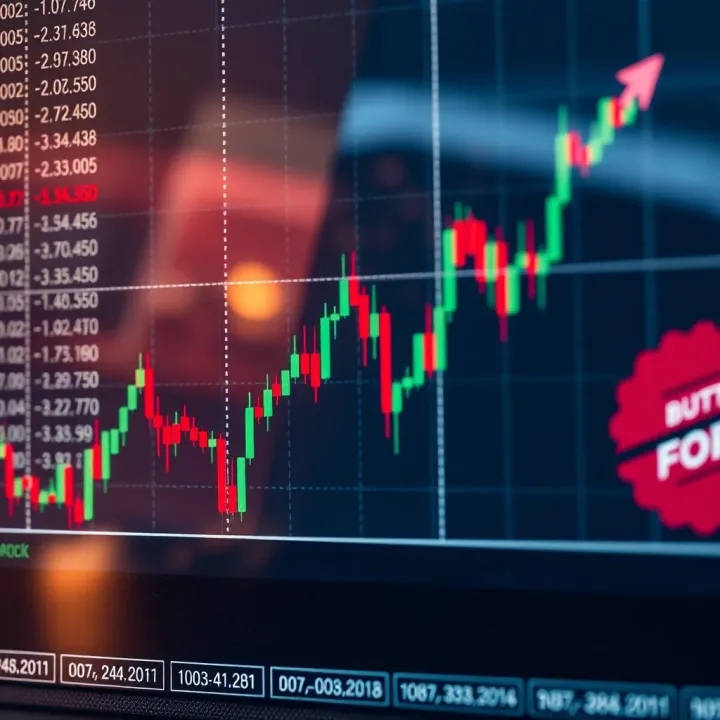
The first practical step in drawing Fibonacci retracement is spotting the correct swing highs and lows on the price chart. A swing high is the peak point before the price starts declining, while a swing low is the trough before the price begins to rise. These points act as anchors for the retracement levels. For example, if a stock like Safaricom rises from KSh 30 to KSh 40 before falling back, KSh 40 is the swing high and KSh 30 is the swing low.
In Kenyan markets, clear swing points might emerge from price action throughout the day or over weeks. It's crucial to select significant swings related to major market moves rather than minor daily fluctuations, as the retracement levels will be more reliable that way.
The Fibonacci retracement tool uses several key ratios derived from the Fibonacci sequence, most notably 23.6%, 38.2%, 50%, 61.8%, and 78.6%. These percentages indicate how far the price might pull back within a trend before continuing in the original direction.
23.6% level often acts as a shallow retracement where minor corrections occur.
38.2% and 50% levels are commonly watched since prices tend to pause or reverse around these points.
61.8% is known as the golden ratio and often marks a strong support or resistance zone.
78.6% is a deeper retracement level and can signal a possible trend reversal if breached.
For instance, if an NSE stock moves from KSh 100 to KSh 150, a retracement to the 38.2% level means the price could fall back to roughly KSh 130.9 before bouncing back upward. Kenyan traders often combine these levels with volume and trend analysis to confirm trades.
Identifying and drawing Fibonacci retracement levels with precision is a practical skill that can improve timing when buying or selling, minimising losses and maximising gains.
By mastering these core steps, you gain a solid foundation to use Fibonacci retracement as part of your trading strategy in Kenyan and broader East African markets.
Fibonacci retracement can be a handy tool for Kenyan traders looking to identify probable support and resistance levels in various markets. Given the unique economic and market dynamics in Kenya, this tool helps bring some order to the sometimes volatile NSE (Nairobi Securities Exchange) and other financial activities.
By applying Fibonacci retracement, traders can spot where prices are likely to pull back before resuming a trend. For instance, after the recent bullish run of Safaricom shares, a retracement level could signal a good time to buy during a temporary dip rather than waiting for prices to fall further. This insight helps investors avoid knee-jerk reactions, especially in a market where sentiment often swings quickly due to local news or external shocks.
The NSE has many listed companies like Equity Bank, KCB Group, and East African Breweries, where Fibonacci retracement finds practical use. Traders mark the recent high and low in stock price movements over a set period—say a 2-week window—and draw the retracement levels to anticipate where the stock might pause or reverse. For example, a retracement level around 61.8% or 38.2% often aligns with price stalls as traders take profit or new buyers step in.
In Kenya’s market, factors such as corporate earnings announcements, interest rate decisions by the Central Bank of Kenya (CBK), and political developments can cause sharp price swings. Using Fibonacci levels alongside an understanding of these events improves a trader’s ability to time entry and exit points effectively.
Moving averages smooth out price data to reveal the general direction of a stock’s price over a specific period. Common choices include the 50-day and 200-day moving averages. When combined with Fibonacci retracement levels, moving averages act as a confirmation tool. If a retracement level coincides with a moving average, it strengthens the case for that level acting as support or resistance.
In practice, say KCB’s share price pulls back to the 50% Fibonacci retracement level, which also happens to be near the 50-day moving average. This confluence can give traders more confidence that the price might hold and bounce back from that level. Conversely, if prices break below both, it might signal further decline.
The RSI is a momentum oscillator measuring the speed and change of price movements. It ranges from 0 to 100, with readings above 70 indicating overbought conditions and below 30 suggesting oversold.
Used alongside Fibonacci retracement, the RSI can help confirm potential reversals. For example, if stock prices near a key Fibonacci retracement level and the RSI dips below 30, it could signal that the stock is oversold and due for a bounce. Kenyan traders watching companies like Safaricom might use this confluence to enter trades with better timing.
Combining Fibonacci retracement with tools like moving averages and RSI sharpens your trading decisions by blending trend, support/resistance, and momentum insights, especially in dynamic markets such as Kenya’s NSE.
By integrating these technical indicators, Kenyan traders can better navigate local market shifts and improve the timing of their trades while reducing reliance on guesswork.
Fibonacci retracement levels are widely used by traders to spot potential reversal points in price movements. These levels help in identifying good entry and exit points, which is essential for managing risk and locking in profits. In Kenyan markets, where volatility can be high due to local and global influences, these strategies give traders a clearer framework to work with instead of relying solely on gut feeling.
Entry points using Fibonacci levels often occur when the price retraces to one of the key Fibonacci ratios, like 38.2%, 50%, or 61.8%, after an initial price move. For example, if a stock listed on the Nairobi Securities Exchange (NSE) surges from KS00 to KS50, traders watch the retracement levels to buy on dips around KS30 (which is roughly the 38.2% retracement). This approach allows traders to enter positions at a more attractive price within an overall upward trend.
Exiting trades also uses these levels by setting target prices near Fibonacci extensions or previous highs and lows. A trader might sell at the 61.8% retracement or higher, anticipating resistance. This method reduces the guesswork in timing exits and helps lock gains effectively.
Using Fibonacci levels for stop loss and take profit is about managing risk carefully. A common approach is placing a stop loss just beyond a Fibonacci level where the trend would be considered invalid. For instance, if your entry is at the 50% retracement level of a price move, setting a stop loss slightly below the 61.8% level offers protection without being too tight to trigger on normal price fluctuations.
Take profit targets are often set near the next Fibonacci level beyond the entry point, or at previous swing highs or lows. For example, if you buy at the 38.2% level, a take profit could be at the 23.6% level or the recent peak. This strategy balances aiming for good returns while respecting market structure.
Using Fibonacci retracement for stop loss and profit targets gives a disciplined, rule-based approach, helping Kenyan traders avoid emotional decision-making in fast-moving markets.
In practice, these strategies work best when combined with local market knowledge and other indicators like volume and moving averages. Kenyan traders often find more success when they integrate Fibonacci retracement with fundamental insights about the NSE or economic news affecting sectors. That mix helps avoid false signals and improves overall trading outcomes.
Fibonacci retracement offers useful insights into potential support and resistance zones, but traders must understand its limitations before relying on it fully. While it helps map price corrections, it doesn’t guarantee that prices will respect these levels in every situation. Ignoring the risks can lead to poor decision-making and losses, especially in volatile markets like the Nairobi Securities Exchange (NSE). Understanding why you should not depend on Fibonacci retracement alone, and how market conditions affect its accuracy, is vital for better trading outcomes.
Relying solely on Fibonacci retracement ignores the bigger picture. The market is influenced by many factors, including economic data releases, political developments, and investor sentiment. For example, during Kenya’s 2022 general elections, stock movements were heavily swayed by political rumours rather than technical levels. In that context, Fibonacci levels did not always hold as expected.
Combining Fibonacci retracement with other tools such as moving averages, Relative Strength Index (RSI), or volume analysis improves decision-making. Moving averages help confirm trend direction while RSI can spot overbought or oversold conditions. Without these confirmations, signals from Fibonacci lines may be misleading, resulting in false entry or exit points.
Traders should view Fibonacci retracement as part of a toolbox, not the sole decision-maker.
Certain market environments make Fibonacci retracement less reliable. Highly volatile markets or sudden shocks often cause prices to crack support or resistance without clear reaction at Fibonacci levels. For example, during 2020's COVID-19 crash, many Kenyan stocks broke past typical retracement levels due to panic selling.
Another factor is market liquidity. Thinly traded stocks on the NSE may show erratic price swings that don't respect Fibonacci ratios. Conversely, heavily traded stocks tend to follow technical patterns more closely.
Additionally, trending markets with strong momentum sometimes skip retracement zones altogether, moving rapidly to new highs or lows. In such cases, expect Fibonacci levels to act more as guidance than certain turning points.
Understanding these risks allows traders to adjust their strategies—such as widening stop-loss margins or avoiding Fibonacci entries during high-impact news events.
In summary, while Fibonacci retracement is a popular tool in Kenyan trading circles, it should not be used in isolation. Factoring in other indicators and recognising market conditions helps mitigate risks and improves the chances of making profitable trades.
📈 Explore crypto trading in Kenya with this practical guide! Learn strategies, market basics, risk management, and stay secure in local crypto space.

💡Explore cryptocurrency trading in Kenya! Learn key concepts, smart strategies, risk management, and how to stay secure and compliant with local rules.

📈 Learn how to read and use candlesticks in trading! From basics to advanced patterns, understand their role in forex, stocks & commodities markets. 📊
Learn how binary trading works in Kenya 🇰🇪, including key strategies, risks, legal insights, and steps to help you trade wisely and confidently.
Based on 9 reviews