
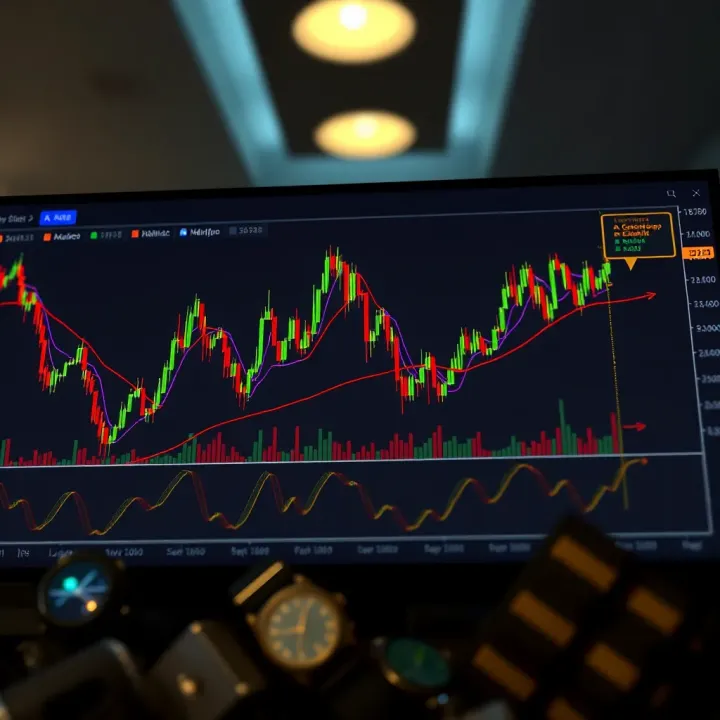
Essential Forex Chart Patterns Guide PDF
📈 Master key forex chart patterns with our clear guide! Download practical PDFs to improve your trading analysis and make smarter decisions in the market.
Edited By
Matthew Hughes
Knowing forex chart patterns helps traders and investors spot price trends and make smarter decisions. These patterns show repeated price movements on currency charts, giving clues about where the market might head next. In Kenya, where many rely on forex trading for additional income or business expansion, understanding these patterns is particularly useful.
Forex chart patterns fall into two main groups: continuation patterns and reversal patterns. Continuation patterns suggest that the existing trend will keep going, while reversal patterns hint at a possible change in direction. For example, a "head and shoulders" pattern often signals a trend reversal, usually from bullish (rising) to bearish (falling).

Recognising these patterns requires practice and careful chart analysis. Traders often use candlestick charts because of their visual clarity, which is preferred when monitoring currencies like the US dollar (USD) against the Kenyan shilling (KES). Spotting a "double top" or "triangle" pattern early can mean the difference between a profitable trade and a loss.
Here’s why mastering forex chart patterns matters:
Better timing: Spot entry and exit points for trades.
Risk management: Set stop-loss levels based on pattern signals.
Trend confirmation: Understand whether to hold or close positions.
Successful forex trading is partly about recognising reliable signals before the crowd moves.
To get a solid grip on these patterns, many Kenyan traders turn to PDF guides and eBooks from trusted sources like local forex academies or international brokers with Kenyan operations. These resources provide clear illustrations, real Kenyan market examples, and strategies adapted for our local trading environment.
If you want to sharpen your skills, focus on:
Familiarising yourself with common patterns like flags, pennants, and wedges.
Practising pattern identification on popular platforms such as MetaTrader 4 or TradingView.
Applying patterns in demo accounts before risking real KSh funds.
That way, you not only read the charts but also understand the 'why' behind market moves. This practical approach suits investors and analysts who want more than theory — real, actionable insights that fit the Kenyan forex market.
In the next sections, we will break down key forex chart patterns, how to identify them, and where to get helpful PDF resources tailored to Kenyan traders.
Forex chart patterns provide visual clues about future price movements. Understanding them helps traders anticipate trends, spot reversals, and make decisions with confidence. For example, a Kenyan trader following the KES/USD pair can better predict when the market is about to change direction by recognising patterns on their trading platform charts. This section lays a foundation for using these patterns practically in daily forex trading.
Chart patterns are distinct formations created by price movements over time on a chart. These shapes reflect trader psychology and market sentiment. By identifying patterns like triangles, flags, or head and shoulders, traders get a snapshot of likely future moves. Their purpose is to translate price action into actionable signals that can inform entries and exits.
In technical analysis, chart patterns form one pillar alongside indicators and volume analysis. They provide a direct, visual approach to market behaviour without relying on complex calculations. Technical analysts use these patterns to forecast price direction, validating them with other tools. This combined method often yields better trading decisions in volatile markets, such as forex.
Chart patterns often signal whether a trend will keep going or if a reversal is imminent. For instance, a rectangle pattern might show a pause before the current trend resumes. Conversely, a head and shoulders pattern typically warns of a trend reversal. Traders who spot these early can avoid losses or capitalise on new trends by timing their trades accordingly.
Besides forecasting direction, patterns help with when to enter or exit trades. Well-formed patterns provide clear points for setting stop-loss and take-profit orders. This helps in limiting losses and locking profits, essential to managing risk in the fast-moving forex market. In the Kenyan context, where external news can quickly shift sentiment, such pattern-based timing is invaluable.

Recognising and understanding forex chart patterns isn’t about guarantees but about stacking the odds in your favour. With practice, these patterns become a trader’s blueprint for smarter decisions.
Forex chart patterns serve as a visual language that traders use to predict future price action. Understanding these common patterns helps you make informed decisions about when to enter or exit trades. They provide practical clues on whether a current trend might continue or reverse, allowing you to adjust your strategy accordingly. This section breaks down key patterns you’ll encounter, making it easier to spot them on charts and apply them profitably.
Flags and Pennants are short-term continuation patterns that show brief pauses in a strong price trend before it resumes. A flag looks like a small rectangle slanting against the prevailing trend, while a pennant appears as a tiny symmetrical triangle. Suppose the Kenyan shilling (KES) is rising steadily against the US dollar on the hourly chart, then forms a small flag or pennant. When the price breaks out from this pattern, it usually resumes the uptrend, giving traders a chance to join the move with better timing and limited risk.
Rectangles form when price moves sideways within a horizontal range, bounded by clear support and resistance levels. This pattern represents consolidation where buyers and sellers battle it out before the market decides on the next direction. For instance, if the EUR/USD pair fluctuates between 1.0800 and 1.0900 for several days, the rectangle forms. A breakout above or below this range signals the next major move. Kenyan traders often watch for such breakouts before placing trades to avoid getting caught in choppy sideway moves.
The Head and Shoulders pattern signals a potential trend reversal, typically marking a shift from bullish to bearish momentum. It consists of three peaks: two smaller shoulders on either side of a taller head. When price breaks below the neckline connecting the two shoulders’ lows, the trend likely reverses. For example, if USD/JPY forms a head and shoulders pattern on the daily chart, breaking the neckline would hint that the prior uptrend is ending, helping traders to exit longs or consider shorts.
Double Tops and Bottoms indicate strong resistance or support zones. A double top looks like two successive peaks at roughly the same price, suggesting a failed attempt to push higher. Conversely, a double bottom has two lows around the same level, hinting that selling pressure is exhausted. In practice, Kenyans trading GBP/USD might spot a double bottom after a downtrend, signalling a buying opportunity as price rebounds.
Triangles are patterns where price consolidates with converging trendlines forming a triangle shape, reflecting diminishing volatility before a breakout. There are three main types: ascending, descending, and symmetrical. An ascending triangle with a horizontal resistance and rising support typically signals bullish continuation. Descending triangles tend to break downwards, while symmetrical triangles could break either way. Triangles provide clear entry points when price breaks one of the boundaries, useful for Kenyan traders dealing in fast-moving forex pairs.
Spotting these common chart patterns can greatly improve your game. They serve as road signs on your trading journey, helping you navigate the twists and turns of forex markets with more confidence and control.
Understanding how to read and interpret forex chart patterns is essential for making informed trading decisions. These patterns act as visual cues on price charts, signalling potential market movements. When traders accurately identify and interpret them, it improves timing for entries and exits and helps manage risk effectively. This section focuses on recognising pattern formations and avoiding common pitfalls.
Recognising key lines and shapes means spotting the distinctive formations such as trendlines, support and resistance zones, and geometric shapes like triangles or rectangles. For instance, a head and shoulders pattern has a clear peak (head) between two smaller peaks (shoulders), connected by a neckline that serves as support. Learning to draw these lines helps isolate the pattern amid price fluctuations. Without this, traders might miss important signals or misinterpret random price moves as meaningful patterns.
Confirming patterns with volume and indicators strengthens the reliability of the signals given by price alone. Volume often spikes at breakout points, validating the move beyond trendlines. Similarly, technical indicators like the Relative Strength Index (RSI) or Moving Average Convergence Divergence (MACD) can confirm momentum shifts associated with pattern completion. For example, a breakout from a triangle pattern accompanied by rising volume and bullish MACD crossover increases confidence that the trend continues.
Misreading false breakouts is a frequent error where traders jump into positions when price briefly moves beyond a pattern boundary but then reverses. This can lead to losses if the breakout does not hold. A classic case is a false breakout above a resistance level with low volume. Waiting for confirmation such as a retest of the breakout level or supporting indicator signals can prevent this mistake.
Ignoring overall market context often leads traders to rely solely on patterns without considering bigger-picture influences like economic news, trend strength, or other technical factors. For example, a head and shoulders pattern signalling a reversal might fail in a strong uptrend driven by solid fundamentals. Understanding the market environment ensures that chart patterns are interpreted within the correct framework, avoiding misleading trades.
Reading forex chart patterns is both an art and a science. Paying attention to how patterns form, confirming signals with volume and indicators, and keeping the broader market in mind will sharpen your trading edge. Be patient and avoid rushing into trades based on incomplete information.
Implementing these practical steps helps Kenyan traders navigate the complexities of forex markets wisely, especially when combined with local knowledge and disciplined money management.
Forex chart pattern PDFs are valuable tools for traders who want clear, visual guides outside of live charts. These downloadable resources can be used anytime for quick reference and help deepen your understanding of various pattern types. For example, a PDF illustrating a head and shoulders pattern can be printed and studied without needing an internet connection, making it easy to absorb the details whenever convenient.
Trusted forex educational websites often offer comprehensive PDF guides that are well-researched and regularly updated. These sites provide step-by-step explanations with clear illustrations, which are useful when you want a thorough breakdown of chart patterns at your own pace. For instance, platforms such as BabyPips and Investopedia may have downloadable cheat sheets that break down complex patterns into digestible pieces, tailored for both beginners and experienced traders.
Broker resource centres are also good places to source PDF materials. Many brokers operating in Kenya, like XM or HotForex, provide free PDFs as part of their educational packages. These resources focus on practical applications relevant to the broker’s trading platform and often include pattern identification with real-life examples seen in current markets, which aids in linking theory to practise quickly.
Trading forums and communities can be surprisingly rich sources for PDFs shared by fellow traders. Forums like Forex Factory or local Kenyan trading groups sometimes upload user-created cheat sheets and guides that reflect what’s currently trending or working in the market. Engaging with these communities not only gives you access to PDFs but also the chance to discuss and get updated strategies, further enhancing your trading toolbox.
Practice by printing and drawing patterns helps to internalise your pattern recognition skills. By manually sketching patterns as they appear in your PDFs, you sharpen your eye for the shapes and rules. This hands-on approach beats just reading or scrolling through pages. For example, printing several sheets covering different patterns and annotating each with notes on price action can turn passive knowledge into active skill.
Combining PDFs with live chart study is essential for real-world application. PDFs lay the foundation, but seeing patterns form and evolve on live charts hones your timing and decision-making. Use your PDF resources as a checklist while watching platforms like MetaTrader or TradingView live. This blend helps you spot nuances like volume changes or false breakouts, which a static PDF alone cannot convey.
Remember, PDFs are like training manuals — they highlight the theory and examples, but real trading success comes from consistent practice alongside live market experience.
Using PDFs wisely means pairing them with real-time market observation and regular practice. This way, you build confidence and skill steadily, which Kenyan traders especially find useful when navigating volatile forex pairs from KES crosses to global majors.
Forex chart patterns are not one-size-fits-all, especially in Kenya’s unique market environment. Applying these patterns with local market factors in mind improves decision-making and risk management for Kenyan traders. For example, knowing how the Kenya shilling (KES) interacts with major currencies reveals opportunities and pitfalls that generic advice may skip.
Kenyan traders often focus on forex pairs involving the Kenya shilling, commonly called KES crosses, like KES/USD and KES/EUR. These pairs react to both global shifts and domestic policy changes by the Central Bank of Kenya (CBK). For instance, CBK’s adjustments to interest rates or interventions to stabilise the shilling cause visible movements in these pairs, which can form clear chart patterns. Knowing this helps traders anticipate trend reversals or continuation signals specific to these pairs rather than relying solely on global patterns.
Beyond KES crosses, global majors such as EUR/USD, GBP/USD, and USD/JPY remain popular due to high liquidity and tight spreads. Kenyan traders benefit from these pairs because they provide consistent price action, making chart patterns like head and shoulders or double bottoms easier to identify and trade profitably.
Liquidity in the Kenyan forex market varies depending on the pair and time of day. KES crosses usually have lower liquidity compared to majors, resulting in wider spreads and sometimes erratic price swings. When chart patterns form in these pairs, traders must verify if breakout signals are reliable or just false moves caused by low liquidity.
Volatility also matters. The Kenya market can experience sudden moves during Central Bank announcements, elections, or external shocks like oil price changes. These events may cause patterns to fail or deliver unexpected results. Kenyan traders should combine pattern analysis with calendar events and local news to make more informed trades, avoiding whipsaws common during volatile conditions.
Most Kenyan traders fund their forex trading accounts using M-Pesa, the dominant mobile money service. Its widespread availability and ease make it the preferred deposit method on several local and international trading platforms. Recognising this, some brokers offer direct M-Pesa integration, which means faster deposits and withdrawals, reducing downtime between identifying a pattern and placing a trade.
For instance, a trader spotting a bullish pennant on the KES/USD pair can quickly top up their account with M-Pesa and join in the trade without delays common in bank transfers. This integration supports timing-sensitive trading strategies based on chart patterns.
Kenya hosts several local forex brokers who understand the market nuances and regulatory environment. These brokers often customise their platforms to support Kenyan traders, offering KES accounts, Swahili customer support, and local payment methods. Using such platforms allows traders to access live charts that are updated in real-time with spreads and execution speeds aligned with local market conditions.
Traders should also consider platforms popular in Kenya such as MetaTrader 4 and 5, which provide extensive charting tools that make detecting patterns easier. Some local brokers bundle educational PDFs and tutorials on chart pattern strategies, making it easier for traders to learn and implement techniques with the support of localised resources.
Kenyan traders who combine global best practices in chart analysis with local insights and tools stand a better chance of making profitable forex trades. This is especially true when timing and market context are critical.
By focusing on relevant currency pairs and leveraging tools like M-Pesa and local brokers’ platforms, Kenyan forex enthusiasts can harness the practical benefits of chart patterns without falling prey to common pitfalls.
📈 Master key forex chart patterns with our clear guide! Download practical PDFs to improve your trading analysis and make smarter decisions in the market.

📈 Master key chart patterns in technical analysis to spot market trends. Get practical tips & PDFs for deeper learning and smarter trading decisions! 📊

📈 Explore crypto trading in Kenya with this practical guide! Learn strategies, market basics, risk management, and stay secure in local crypto space.

Learn how to login to Deriv with step-by-step tips 🚀 Create an account, fix common issues, and keep your Kenyan account secure with ease! 🔒
Based on 11 reviews