
Online Forex Trading Guide for Kenyan Investors
📈 Learn practical online forex trading tips for Kenyan investors. Understand platforms, risks, legal rules, and how to start trading confidently in the Kenyan forex market.
Edited By
Thomas Wright
Margin in forex trading is a tool that lets you open bigger trades than your money would normally allow. It’s like borrowing some cash from your broker so you can buy or sell more of a currency pair. For Kenyan traders, understanding how margin works is key to using this tool safely without losing more than you expect.
Margin isn’t a fee, but a portion of your account balance that acts as security for the trade. For example, if you want to trade $10,000 (approximately KS.3 million) but only have KS30,000 in your account, margin makes this possible by allowing you to put down just a fraction of the total amount – say 1%. The broker covers the rest until you close the trade.
Using margin wisely can increase your potential profits, but it also raises the risk of losses.
Initial Margin: The amount required to open a position.
Maintenance Margin: The minimum equity you must keep to hold your trade.
Margin Call: When your equity falls below maintenance margin, your broker may issue a margin call, asking you to add funds or close positions.
If your trade moves against you and your losses exceed the margin, the broker will ask for more funds or close your trade automatically to limit risk. This is important because forex markets can move quickly, especially with events affecting currencies such as the Kenyan shilling.
Suppose you have KS0,000 in your trading account. With a 50:1 leverage typical in forex, you could control up to KS.5 million worth of currency. But if the market moves just 2% against you, you'd lose KS0,000 - your entire margin.
This shows why margin management is crucial. Kenyan traders should monitor positions closely and avoid using full leverage, especially when markets are volatile or during economic announcements.
Leverage: The ratio showing how much bigger your position is compared to your deposit.
Equity: Your total account balance including unrealised profits or losses.
Free Margin: Equity minus used margin; money you can use for new trades.
Understanding these basics helps Kenyan traders maximise opportunities while protecting their capital in forex markets.
In the next sections, we'll explore risk management strategies and common pitfalls to avoid when trading on margin.
Margin is a key concept in forex trading that allows you to control larger trading positions without needing to have the full amount of capital at hand. Unlike your own capital—the actual cash or funds in your trading account—margin is essentially a deposit or security held by your broker to cover potential losses. For instance, if you have KSh 20,000 in capital and the broker requires a 2% margin, you’d only need to put up KSh 400 to open a trade worth KSh 20,000.
This difference between margin and capital is important because margin acts like a small stake that unlocks greater trading opportunities. It’s not additional money you earn but rather a form of collateral that your broker holds while lending you the rest to place bigger trades. Kenyan traders need to understand this distinction so they don’t confuse margin with free funds—they must always keep enough capital to cover risks and avoid margin calls.
Margin enables bigger trades by allowing traders to multiply their purchasing power, often referred to as leverage. Take an example: with a margin requirement of 1%, you can enter a trade worth KSh 100,000 using just KSh 1,000 of your own capital. This means you can participate in higher-value transactions than your available funds would allow, amplifying potential profits. But of course, this also means losses are magnified, so it’s wise to use margin carefully.
Brokers offer margin because it allows them to attract more clients and increase trading volumes. They charge interest or fees on the borrowed amount, which adds to their income. However, brokers also share the risk with traders; if the market moves against you significantly, the broker can close your position to prevent further losses, protecting their own capital.
From a Kenyan trader’s perspective, margin increases buying power by enabling larger positions with less upfront capital. This opens doors to better market exposure and the possibility of higher returns even with modest account sizes. For example, a small investor with KSh 10,000 can use margin to open a trade much bigger than that by meeting the margin requirement. Still, it is crucial to balance this increased power with sensible risk management to avoid wiping out one’s account.
Understanding margin isn’t just about boosting buying power—it’s about knowing the risks and responsibilities that come with borrowing from your broker.
Margin is different from your capital; it’s a security deposit rather than free money.
Margin enables larger trades by letting you use leverage.
Brokers provide margin to grow their business, sharing risk with traders.
Increased buying power from margin can improve profits but also magnifies risk.
With this basic grasp of what margin means and how it functions, you can better appreciate its role in forex trading and make smarter decisions to grow your investments safely.
Understanding how margin works in practice is key for Kenyan traders to make informed decisions in forex trading. Margin is the actual amount you need to put up to open a trade, while the rest of the position size is effectively borrowed from your broker. Knowing how to calculate and manage margin can help you avoid unexpected calls on your account and enable smarter position sizing.
The margin percentage or ratio reflects the fraction of the total trade value you must have in your account to open a position. For example, if your broker requires a 2% margin, this means you need to provide 2% of the trade's full value upfront. This acts like a deposit that guarantees your commitment to the trade.
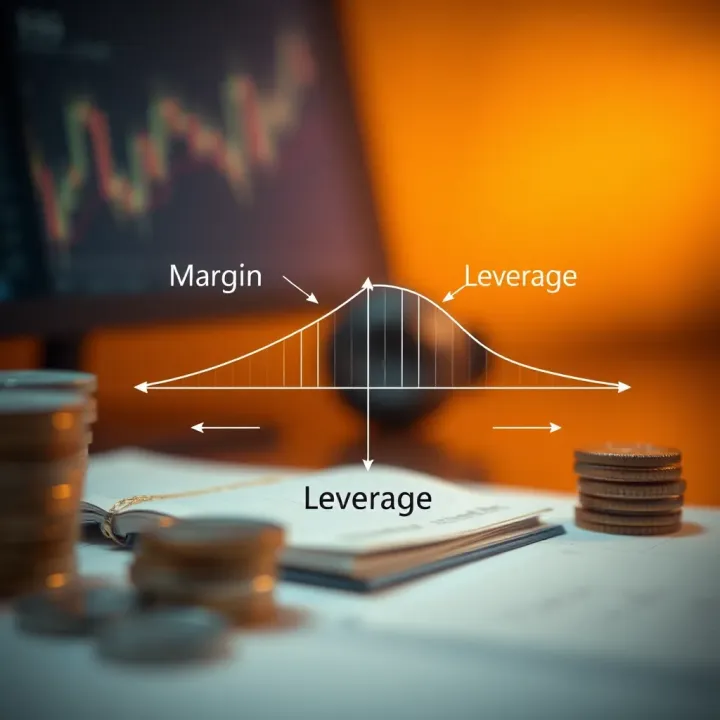
The practical relevance is clear: lower margin requirements allow you to control larger positions with less money, but this also means higher risk. Understanding this helps you decide whether a broker’s margin terms suit your risk appetite.
For a Kenyan trader, consider opening a trade worth KS00,000 with a 2% margin requirement. You’ll need KS,000 in your trading account as margin to hold this position. If your account has only KS,500, you won’t be able to open this trade until you add more funds. This straightforward calculation helps avoid surprises and ensures your trades comply with margin rules.
Leverage is closely tied to margin but presents the concept from the opposite angle. While margin is the amount you put down, leverage is how much you control compared to your margin. Using the previous example, a 2% margin corresponds to 50:1 leverage (because 1 divided by 0.02 equals 50). This means each shilling you put in controls KS0 in the market.
Leverage can increase profits, but it also magnifies losses. That is why using leverage responsibly matters a lot. You should avoid over-leveraging your account; for instance, even if a broker offers 100:1 leverage, it does not mean you always should use it fully. Kenyan traders should stick to comfortable levels, maybe 10:1 or 20:1, at the start, to manage downside risks better.
The margin level percentage shows how much margin you have left compared to what you are currently using. It’s calculated as (Equity / Used Margin) × 100. A margin level above 100% means you have more money than the current margin requirements; below 100% indicates you risk a margin call.
Free margin, on the other hand, is the leftover amount in your account that you can use to open new trades or absorb losses. If your free margin runs low, you won't have room to enter new positions, and unexpected market moves might force your trades to close prematurely.
Keeping an eye on free margin helps you plan your trades without pushing your account to the brink. A good practice is maintaining some free margin cushion so your portfolio can withstand volatile market swings common in the forex market.
Remember, margin is not a fee but a security deposit that lets you control bigger trades safely, if managed well. Understanding the exact numbers behind your margin and leverage levels empowers you to trade prudently and avoid costly errors.
In summary, knowing how to calculate required margin, distinguish it from leverage, and monitor margin level plus free margin forms the backbone of responsible forex trading in Kenya. These aspects ensure you trade within your means and develop strategies that align with your financial goals and risk tolerance.
Trading on margin allows you to control larger positions with a smaller capital outlay, but it also exposes you to risks that can quickly erode your funds if not managed properly. The potential to amplify gains comes with the downside of magnified losses, making it crucial for traders to understand what happens when margin levels fall too low and how market volatility can affect their positions.
A margin call occurs when your account’s equity falls below the broker’s required maintenance margin. Basically, it is a warning that you don’t have enough funds to support your open trades. For instance, if you started with a KSh 50,000 account balance and used margin to open trades worth KSh 500,000, but your losses push your equity down to KSh 10,000 while the maintenance margin is KSh 15,000, the broker will issue a margin call. This signals you need to add more funds or close some positions to bring your margin back above the minimum.
Margin calls are vital because they protect both you and the broker from further losses. Ignoring them risks the broker closing your trades automatically, often at unfavourable prices.
If you don’t respond to a margin call, your broker may issue a stop-out by liquidating some or all of your positions. This prevents your account from going negative, but the losses can still be significant. For Kenyan traders, this could be devastating if the funds were hard-earned. For example, during a sudden sharp move in the forex market, if the price shifts against you rapidly and your margin drops too low, your trades could get closed at a loss without much notice.
Besides financial loss, a margin call can also impact your trading psychology and confidence. Many traders find it tough to bounce back after a margin call forces closure of positions, so it’s important to manage margin levels carefully from the start.
Forex markets are known for their volatility, especially around major news events or economic releases. Rapid price swings directly affect your margin because they change the value of your open positions. A sudden drop in the currency you are long on will reduce your equity sharply, potentially triggering a margin call.
Take the Kenyan Shilling against the US dollar: if a political event causes the KSh to weaken suddenly by 3% in a matter of hours, those trading USD/KES on margin will see their accounts affected immediately. The higher your leverage, the smaller the price move needed to wipe out your free margin.
To handle margin during volatile times, it's wise to reduce position sizes or avoid overleveraging. This means you should pick trade sizes that keep enough buffer in your account to withstand swings without hitting margin calls quickly.
Using stop-loss orders also helps limit losses before margin is exhausted. Kenyan traders can monitor their accounts using platforms like MetaTrader or brokers’ mobile apps to check margin levels continuously. Having extra funds ready to top up your margin during unexpected volatility can prevent forced liquidation.
Staying alert and managing margin carefully during volatility shields your account from sudden wipeouts and keeps you in the game longer.
In summary, while margin trading offers opportunities for higher profits, it demands constant attention to margin levels and market conditions, especially considering Kenya’s evolving forex environment and currency fluctuations.
Managing margin well is key for anyone trading forex, especially in Kenya where market swings can be sudden and impact small accounts heavily. Responsible margin management helps protect your capital, avoid forced liquidations, and keeps you in control even when the market moves against you. This means planning your trades, keeping an eye on your account health, and using tools that limit losses.
Balancing risk and reward means choosing trade sizes that fit your budget and risk tolerance. For example, if you have KSh 50,000 in your trading account, risking KSh 1,000 on a trade represents 2% of your capital, which is generally safer than risking 10% at once. Keeping risk low per trade allows you to stay longer in the game, avoid margin calls from sudden market shocks, and benefit from multiple small wins rather than a few big risky bets.
Examples tailored to Kenyan traders’ budgets show how smaller trade sizes suit many locals starting with limited capital. A trader with KSh 20,000 capital might begin with micro lots or mini lots, corresponding to smaller margin requirements. Scaling trade sizes gradually as the account grows helps prevent blowing the account in one or two bad trades. This practical approach fits typical Kenyan trader budgets while building confidence and experience.
Using trading platforms to track margin is straightforward with modern apps used by Kenyan traders. Most platforms show margin level as a percentage, free margin available, and used margin clearly. Checking these regularly helps you spot when your account approaches risky levels, so you don’t get caught unexpectedly. Staying informed means you can adjust or close losing trades before margin gets dangerously low.
Taking action before margin calls occur means reacting early by either adding funds to your account or reducing open trades. For instance, if your margin level falls near 100%, it’s warning time to close some positions or deposit more capital. This prevents brokers from automatically closing trades to protect themselves, which usually happens at a margin call or stop out level, often with losses you could’ve limited yourself.
How stop-loss orders limit losses is simple yet vital. By placing a stop-loss, you automatically exit a trade when the price hits a level you can afford to lose. For example, if you open a trade expecting the USD/KES to rise but it drops by 1%, a stop-loss limits your loss without waiting for you to watch the market all day. This tool prevents deep losses that eat into your margin and possibly trigger margin calls.
Other risk management techniques include using take-profit orders, diversifying trades across currency pairs, and avoiding trading on high volatility without extra caution. Kenyan traders should also learn to manage leverage wisely—choosing a lower leverage ratio reduces the risk of sudden margin calls. Combining these tactics keeps your trading consistent and protects your hard-earned capital.
Monitoring your margin actively and setting trade sizes that match your budget are the pillars of trading responsibly. These steps help you stay in control and reduce stress from unpredictable forex markets.
By practicing these methods, Kenyan forex traders can protect themselves from severe losses while still taking advantage of margin to increase their potential gains safely.
Before diving deep into forex trading on margin, it's essential to understand some key terms that often confuse new traders. These terms affect how your trades perform and how much risk you take. Getting a grip on them helps you avoid surprises, like sudden losses or margin calls, and manage your account better.
Definitions and differences: A margin call happens when your trading account’s equity falls below the broker’s required minimum margin level. Think of it as a warning sign telling you to add funds or close some positions to stop losses. On the other hand, the stop out level is the point where the broker starts closing your positions automatically to prevent your account from going into a negative balance. The margin call is like a heads-up, while the stop out level is the safety net kicking in.
For example, if your broker sets a margin call at 50%, it means when your equity drops to half of the required margin, you get a notification. If it falls further to, say, 20% (stop out level), the broker will close some or all open trades.
How brokers enforce these levels: In practice, brokers monitor your margin level constantly. Once your equity dips to the margin call threshold, some brokers will alert you via email or platform notification. You then have a chance to deposit more funds or reduce trade sizes. But if you ignore the warning and the margin level hits the stop out level, the broker starts closing losing positions automatically. This enforcement protects both you and the broker from deeper losses that can end up costing serious money.
In Kenya, many traders use international brokers who have these systems integrated into platforms like MetaTrader 4 or 5. It's wise to understand your broker’s specific margin call and stop out settings before trading.
What each term means: The initial margin is the amount of money you need to put down to open a new position. It’s a percentage of the full trade value, dictated by your broker’s margin requirements. For instance, if you want to control a KSh 100,000 position and your broker requires a 5% initial margin, you must have at least KSh 5,000 in your account.
Maintenance margin, by contrast, is the minimum equity required to keep your position open. If your equity falls below this level due to market movements, your broker may give you a margin call or close your positions.
How they impact trading positions: The difference between these margins directly affects your ability to hold positions during volatile markets. If prices move against you quickly, your equity might sink below the maintenance margin, triggering margin calls or stop outs. That means you need to watch your trades closely and consider having buffer funds to avoid forced liquidations.
For Kenyan traders, managing initial and maintenance margins well means balancing between taking advantage of leverage and avoiding risk that wipes out your account. For example, with limited trading capital of around KSh 10,000, opening a large position without enough margin buffer could lead to quick stops, especially during unstable hours like market openings or economic announcements.
Always check your broker’s margin requirements and account notifications to avoid unexpected closures. Staying informed is the best way to keep control over your trading decisions.
📈 Learn practical online forex trading tips for Kenyan investors. Understand platforms, risks, legal rules, and how to start trading confidently in the Kenyan forex market.
Discover how Kenyan forex traders can use Finviz 📈 to analyse trends, track currencies, and connect with local practices for smarter trading decisions.
📈 Learn forex trading basics, strategies, and risk management in Kenya with practical tips. Access free PDF guides for easy reference and confident trading today.

📈 Learn how to open and manage forex trading accounts in Kenya. Discover types, broker tips, risks, and strategies to trade confidently in the Kenyan market.
Based on 8 reviews