

How to Use PayPal with M-Pesa in Kenya
Learn how to link PayPal with M-Pesa in Kenya 📱💸. Step-by-step guide to log in, transfer funds, and manage online payments smoothly across both platforms.
Edited By
Daniel Foster
Sarafu is a term many Kenyans encounter when dealing with local and community trade systems, but it often raises questions about what it exactly means and how it operates alongside our familiar Kenyan Shilling or mobile money like M-Pesa. At its core, sarafu means "currency" or "money" in Swahili, yet in recent years it has come to represent more than just traditional cash.
In the Kenyan context, sarafu has expanded to include alternative currencies used within specific communities or project groups. These sarafus often circulate digitally or in physical form, running parallel to the national currency but primarily targeting localised economies. Think of it as local money that people use to trade goods and services within their neighbourhoods, helping to keep value circulating inside those communities.

For instance, in some informal settlements or rural areas, a community may use a type of sarafu to pay for services like haircuts, carpentry work, or local produce. This helps when Kenyan Shilling liquidity is tight, or when people want to encourage trade within their neighbourhoods rather than sending money outwards.
Sarafu can enhance economic resilience by keeping resources circulating within a community, reducing dependence on cash and formal banking.
Local Trust Networks: Sarafu usually depends on trust among community members or groups, where participants agree to accept and recognise it as valid.
Digital Platforms: Some sarafu exist as digital credits tracked via mobile apps or SMS systems, making transactions easy even for those without bank accounts.
Exchangeability: Unlike foreign currencies, sarafu often cannot be exchanged outside its community, which limits its use but strengthens local trade.
Support for Entrepreneurs: Local businesses and traders often benefit, as sarafu can increase their customer base and improve market access.
For financial advisors and investors, sarafu reflects grassroots innovation that complements Kenya's formal financial system. Entrepreneurs should note how sarafu builds alternative trading channels, easing cash flow pressures. Traders might find new markets within sarafu-using communities, while analysts can observe how it shapes local economic patterns.
In sum, understanding sarafu is key to engaging with various Kenyan market segments and appreciating how communities adapt to economic challenges. It’s not a replacement for the Kenyan Shilling but an interesting layer on top of our evolving financial ecosystem.
Understanding what sarafu means is key to grasping its place in Kenya’s economy. At its core, sarafu simply refers to money or currency, the tool that allows people to exchange goods and services without relying on barter. This concept might seem straightforward, but its practical impact stretches from the busy markets of Nairobi to remote trading in rural shambas.
Currency acts as a universal medium that simplifies trade by providing a common ground to value goods and services. In practical terms, instead of swapping a chicken for maize directly, a farmer can sell the chicken for sarafu and then use that sarafu to buy maize or anything else. This reduces the complications of barter, such as finding someone needing exactly what you offer.
Sarafu fuels trade by making transactions easier and faster. For small businesses or informal traders in Kenyan markets, cash or mobile money sarafu allows quick purchases without lengthy negotiations. The widespread use of sarafu in forms like M-Pesa means even those without bank accounts can participate in commerce across vast distances, opening opportunities for scaling small trade beyond local boundaries.
Locally, sarafu is often understood just as money used daily—coins, notes, or mobile funds. However, the broader sense includes alternative currencies and digital platforms accepted within certain communities. For instance, some community currencies operate as sarafu but are pegged locally, supporting barter-like exchanges while still serving as recognised currency. This shows sarafu’s evolving role beyond conventional money.
Barter involves trading goods directly, which works well only if both parties want what the other has. Sarafu removes this catch by acting as a trusted intermediary. With sarafu, a shopkeeper in Kisumu need not find a farmer wanting to swap exactly the shop’s goods; instead, sarafu represents value accepted by everyone, making everyday trade smoother and more efficient.
Initially, communities relied heavily on physical goods for trade—like livestock, grain, or pottery. Over time, as economies grew complex, they shifted to sarafu as a universal value holder. This shift allowed for savings, investment, and larger-scale trade. In Kenya, the evolution also reflects changes from physical currency to digital money, which offers convenience and security alongside traditional forms.
The usefulness of sarafu depends on trust—people need confidence that what they receive as sarafu will hold value when they spend it. This is why Kenyan coins and notes are issued by the Central Bank of Kenya, backed by government guarantees. Similarly, mobile money platforms are widely trusted due to security and regulatory oversight. Without this trust, traders and consumers would hesitate, limiting sarafu’s role as a reliable medium.
Sarafu’s strength lies in its acceptance and the trust people place in it, enabling the wheels of Kenya’s economy to keep turning across urban centres and rural areas alike.
In summary, sarafu is more than just money – it’s the accepted measure of value that supports both everyday trading and long-term economic activities in Kenya. Understanding this foundation helps businesses and investors appreciate how this simple concept drives much of the country’s commercial life.
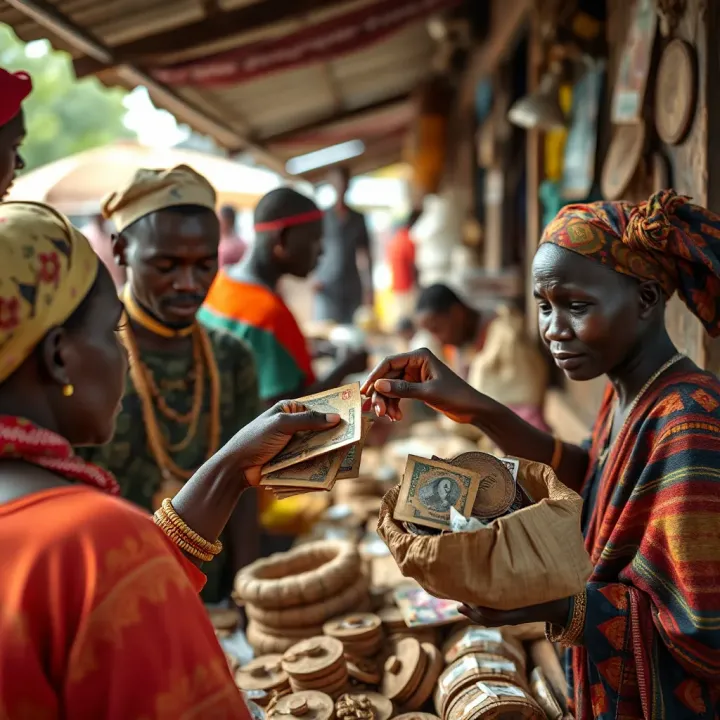
Understanding the historical background and evolution of sarafu helps put its current role into perspective. It reveals how Kenya's economy transitioned over time, adapting to new forms of money while holding onto traditional practices. This history is practical for traders and investors as it highlights the layers of trust and acceptance that underpin today's currency systems.
Before formal currency systems, Kenyan communities relied heavily on barter, exchanging goods and services directly. For example, a farmer might trade maize for livestock or a basket weaver would exchange baskets for food. This method worked well in tightly knit communities with clear understandings of trade value.
However, barter had its limits. It relied on immediate needs aligning, which made trading more difficult over larger areas. This pushed communities to adopt coin and paper money when introduced later by colonial powers, creating a more flexible exchange system.
The introduction of coin and paper money marked a major shift. Initially, these were foreign currencies like the Indian rupee and later the East African shilling, brought in by colonial administrations. These physical currencies allowed more complex trade, supporting growing urban centres like Nairobi and Mombasa, and facilitated tax collection and wages.
These new money forms replaced barter slowly. Many rural areas held onto bartering longer, but coins and notes became essential for trade in markets and towns. Understanding this shift helps explain why some localised trade still prefers alternative currencies or barter-inspired systems today.
Colonial currency systems exerted strong influence over Kenya’s trade and money landscape. British colonial rule introduced the East African shilling as legal tender, cementing control over the economy. These systems prioritised exports, particularly cash crops, and relegated local currencies to secondary roles.
This influence shaped Kenya’s financial infrastructure and institutional frameworks. Even post-independence, many structures and monetary policies reflected these colonial legacies. Traders and investors who appreciate this history can better navigate Kenya’s mixed cash-and-traditional economy.
After independence, Kenya adopted the Kenya shilling (KSh) in 1966 as the country’s official currency, replacing colonial currencies. This move unified the country’s monetary system and strengthened national identity.
The Kenya shilling is managed by the Central Bank of Kenya, which issues coins and banknotes in various denominations for traders and businesses. For example, shop owners in Nairobi or Kisumu rely on KS00 and KS00 notes for daily transactions, reflecting the currency’s central role.
The big leap came with digital and mobile money, especially after M-Pesa launched in 2007. This service turned mobile phones into wallets, making it easy for millions to send, receive and save money digitally. M-Pesa’s rise changed the meaning of sarafu, making it more accessible across Kenya's vast geography.
Mobile money helped informal traders in remote areas engage in commerce without formal bank accounts. This financial inclusion boosted small businesses and eased cash flow. For example, boda boda riders in Nakuru send earnings home via M-Pesa, using digital sarafu as their main currency.
Community currencies and alternative money models have also gained ground, catering to specific economic spaces. These include local trade currencies used in neighbourhood markets or cooperative exchange platforms. They help build community resilience by keeping wealth circulating locally.
Though these systems often operate alongside the Kenya shilling and mobile money, they tackle challenges like limited cash flow or high transaction costs. However, regulatory oversight remains limited, which means traders should conduct due diligence before accepting alternative sarafu.
The evolution of sarafu—from barter, through colonial currency, to digital money—reveals Kenya’s adaptive economy. Knowing this history is key for anyone engaged in trade or investment here.
Barter dominated traditional trade but couldn’t support wider exchanges.
Colonial currencies introduced formal money, shaping Kenya's financial landscape.
Kenya shilling unified the monetary system post-independence.
Digital platforms like M-Pesa transformed sarafu into accessible, electronic money.
Local currencies foster community economies but need careful use due to regulation gaps.
Understanding these layers helps traders, investors, and financial advisors appreciate how sarafu works beyond just a medium of exchange — it reflects Kenya’s economic history and social realities.
Sarafu, as used in Kenya today, takes several forms, each serving unique purposes in trade and everyday transactions. Understanding these varieties helps traders, investors, and entrepreneurs navigate the market better and appreciate the evolving financial ecosystem.
Kenyan coins and banknotes come in different designs and denominations that cater to everyday transactions. Coins range from 1 shilling to 20 shillings, while banknotes include denominations from 50 shillings up to 1,000 shillings. Their differing sizes, colours, and embossed images help users quickly identify value, making cash transactions straightforward, especially in busy markets and rural areas.
Security features play a vital role in maintaining trust in physical sarafu. Modern banknotes contain watermarks, holographic strips, and tactile features to prevent counterfeiting. These measures safeguard businesses and consumers from losses that arise from fake money, which could disrupt economic activities at community levels.
The Central Bank of Kenya (CBK) oversees the issuance, design, and control of physical currency. It ensures adequate supply to meet demand and works to maintain currency stability. CBK’s role also extends to educating the public about recognising genuine notes and coins, which preserves the currency's integrity across the country.
M-Pesa dominates Kenya's digital payment space, handling millions of transactions daily. Its easy-to-use platform lets users send and receive money, pay bills, and buy goods without needing a bank account. This widespread adoption simplifies business for SMEs and traders who rely on fast, secure payments.
Beyond M-Pesa, digital wallets and banking apps from institutions like Equity Bank, KCB, and Co-operative Bank offer mobile-based financial services. They enable users to store funds digitally, access loans, and perform bank transfers seamlessly. These tools expand financial inclusion by bridging gaps where physical bank branches are scarce.
Digital sarafu carries significant advantages such as convenience, speed, and reduced crime risk from carrying cash. However, challenges include network outages, transaction fees, and the risk of fraud through phishing or SIM swap scams. Understanding these helps users mitigate risks and plan their financial activities wisely.
Kenya also has alternative currencies like the Sarafu Credit Network, a community-based digital currency used in several counties to drive local trade. These currencies circulate alongside the Kenya Shilling, favouring areas where cash flow is limited or where communities want to boost local production and consumption.
Community sarafu offers benefits such as fostering closer economic ties, encouraging mutual support, and improving access to goods and services when conventional money is tight. Businesses engaged in these schemes often notice more stable local demand and faster trade cycles.
However, local currencies face limitations. They lack widespread legal recognition and can face regulatory scrutiny from authorities like the CBK and the Capital Markets Authority (CMA). Issues of fraud, lack of liquidity, and limited acceptance also pose risks. These factors mean community sarafu works best as a supplementary system rather than a full replacement for national currency.
Different forms of sarafu shape Kenya’s economy in unique ways—from tangible shillings in hand to digital transfers and innovative local currencies making inroads in community markets.
Understanding how sarafu operates in daily life offers practical insight into its role beyond just a form of currency. For traders, investors, and financial analysts, grasping these workings helps reveal sarafu’s impact on market dynamics, liquidity, and trust in transactions. Sarafu integrates deeply into Kenyan markets, from bustling open-air kiosks to formal businesses, influencing cash flow and economic exchanges.
Common payment methods with sarafu usually involve both mobile money platforms such as M-Pesa and physical cash. Most customers today pay merchants digitally using mobile phones because it’s quick and convenient. For instance, a vegetable seller in Nairobi’s Kariobangi area commonly accepts M-Pesa payments, making it easier for buyers carrying only digital funds. However, cash remains a significant part of transactions in rural or informal settings where mobile network coverage or smartphone usage might be limited.
Integration of mobile money and cash supports seamless payment experiences across different environments. Many vendors accept a mix: customers can pay partly with cash and top up the rest with mobile money. This flexibility improves purchasing power, especially when cash is scarce or when people prefer the safety of mobile wallets over carrying physical notes. Such integration ensures sarafu stays fluid in everyday trade, smoothing over obstacles that could slow down sales.
Receipts and proof of payment are vital for transparency and dispute prevention. Mobile money transactions generate automatic electronic receipts showing details like amount, sender, and timestamp, which customers and sellers can save for reference. In cash transactions, handwritten receipts or simple notes often fulfil this role, especially in formal retail outlets or small shops. Proof of payment strengthens trust between parties and supports record-keeping vital for businesses' bookkeeping or financial audits.
Mobile money transfers across Kenya provide fast, widespread access to funds. People send sarafu via mobile platforms to family members, pay suppliers, or settle debts instantly across vast distances. For example, a farmer in Kisumu can receive payment from a buyer in Nairobi without traveling, making trade more efficient and safer. The convenience of M-Pesa and similar services has increased the velocity of sarafu circulation, impacting consumption and investment.
Bank accounts and safekeeping offer more secure ways to store larger sums of sarafu. Entrepreneurs and traders often deposit mobile money funds into bank accounts to protect their capital and earn interest. Banks provide additional services like loans and overdraft facilities based on these balances, facilitating business growth. The transition from purely cash-based holdings to banked money marks a shift toward formal financial inclusion.
Remittances and cross-border payments extend sarafu’s usefulness beyond Kenya’s borders. Many Kenyans working in neighbouring countries or abroad send money home through mobile money or formal banking channels. This inflow supports families and local economies, with remittances frequently spent on education, health, and small businesses. Moreover, mobile money operators are increasingly cooperating across East Africa, easing cross-border sarafu exchanges with lower fees and faster transactions.
Sarafu’s flexibility in payment, saving, and transfer options is instrumental in weaving it into Kenya’s economic fabric. Whether through a quick mobile payment in town or a bank transfer from abroad, this currency moves where people need it most, supporting everyday livelihoods and broader economic activity.
In sum, sarafu’s role in everyday transactions blends traditional cash with modern digital methods, creating a practical and accessible system for Kenyan businesses and consumers alike.
Sarafu plays a significant role in Kenya’s informal sector and jua kali businesses. These small-scale traders and artisans often operate on tight margins and require a reliable means of exchange that is widely accepted. Sarafu, particularly through mobile money platforms like M-Pesa, provides them with a flexible tool to transact, cope with cash shortages, and build trust within their communities. For example, a boda boda rider can receive payment instantly via M-Pesa, avoiding the need to carry cash and reducing the risk of theft.
Small and medium-sized enterprises (SMEs) also benefit from sarafu by gaining better market access. The ease of receiving payments digitally encourages more customers to engage in trade without the hurdles of physical cash. This expands their reach beyond immediate neighbourhoods, creating opportunities to scale up through online orders or bulk purchases. For instance, a local food supplier in Kisumu can efficiently serve Nairobi clients by accepting payments and coordinating delivery using digital sarafu.
Daily consumer transactions are increasingly facilitated by sarafu, making everyday purchases simpler and safer. Whether buying groceries from a local duka or paying for goods at a market stall, digital payments reduce the wait time and enhance transparency for both buyers and sellers. The ability to combine cash and mobile money also offers flexibility, addressing challenges when one form of money isn’t fully available. This convenience underpins much of the economic activity in Kenyan towns and cities.
Mobile money systems have been vital in reaching the unbanked population in Kenya. Many Kenyans, particularly in rural areas, cannot easily access traditional banking services due to distance or documentation barriers. Sarafu platforms like Safaricom’s M-Pesa bridge this gap by allowing anyone with a mobile phone to participate in the financial system, sending money, paying bills, or receiving salaries without a bank account.
Access to credit and savings has also improved because of sarafu. Digital wallets often link users to microloans and savings products, which were previously hard to get for those without collateral or formal financial histories. M-Shwari, for example, provides small loans instantly based on user transaction patterns on M-Pesa. This enables many entrepreneurs and households to manage cash flow better, grow their businesses, or handle emergencies without resorting to informal and often expensive loans.
Sarafu’s growing presence contributes to formalising the economy by increasing recorded transactions. Digital payments create electronic footprints, helping government agencies like the Kenya Revenue Authority (KRA) track earnings and tax obligations more accurately. This transparency encourages compliance and supports better policy decisions. As more businesses and individuals transact with sarafu, Kenya’s economy becomes more integrated with formal systems, boosting efficiency and governance.
Sarafu, in its various forms, is not just a medium of exchange; it’s a key driver for economic inclusion, business growth, and improved livelihoods across Kenya.
Supports informal traders by providing accessible, secure payment options
Expands SMEs’ reach through digital transactions
Facilitates daily consumer payments combining cash and mobile money
Bridges the gap for unbanked communities via mobile platforms
Enables access to credit and savings through linked digital products
Helps formalise the economy through transparent transaction records
Understanding how sarafu supports these functions clarifies its importance beyond just currency — it is foundational to Kenya's ongoing economic development and the broader hustler economy.
Learn how to link PayPal with M-Pesa in Kenya 📱💸. Step-by-step guide to log in, transfer funds, and manage online payments smoothly across both platforms.

Learn how forex trading works in Kenya 🇰🇪, explore market drivers, key terms, risks, and practical tips to start trading wisely and manage your KSh finances effectively.

📈 Learn how to open a trading account in Kenya, choose the best brokerage platform, and start investing in shares and bonds confidently. Perfect for new and seasoned investors.

📈 Explore how derivatives work in Kenya's markets, key types, risks, and regulations to make informed financial decisions with practical insights.
Based on 7 reviews