
GBP/USD Forecast: Key Trends for Kenyan Traders
📊 Explore GBP/USD trends and forecasts with insights on UK and US economies, market shifts, and global impacts. Perfect guide for Kenyan traders and businesses!
Edited By
David Hughes
The GBPJPY currency pair, combining the British Pound (GBP) and the Japanese Yen (JPY), garners significant attention among forex traders worldwide. For Kenyan traders, understanding this pair's movements in the context of local and global factors is key to making sound trading decisions.
Unlike more commonly traded pairs such as EURUSD or USDKES, GBPJPY tends to exhibit higher volatility due to its mix of a major global currency and a safe-haven asset. This volatility offers both opportunities and risks, especially when economic developments or geopolitical events in either the UK or Japan cause sharp price swings.

Kenyan traders should focus on several concrete aspects when assessing the GBPJPY forecast:
Economic Indicators: Key reports like the UK's GDP growth, Bank of England interest rate decisions, and Japan's Tankan surveys influence the pair. For example, an unexpected rate hike in the UK usually pushes GBP higher against JPY.
Geopolitical Developments: Brexit follow-up policies, UK-Japan trade relations, or tensions in East Asia can impact investor confidence, thus affecting the pair.
Technical Analysis: Using charts with support and resistance levels, moving averages, and momentum indicators helps traders identify entry and exit points.
"Focusing on both macroeconomic data and price action can offer Kenyan traders a more balanced approach to GBPJPY trading."
Moreover, currency fluctuations affect Kenyan importers and exporters indirectly. For instance, changes in GBPJPY can signal wider movements in global risk appetite, which in turn influences emerging market currencies including the Kenyan Shilling.
Practical tools like the eCitizen portal and forex trading platforms allow Kenyan traders to stay updated with real-time data and place trades efficiently. Combining these resources with a clear grasp of GBPJPY’s drivers enhances trading confidence.
In summary, a targeted and informed approach to GBPJPY trading grounded in economic realities, geopolitical awareness, and technical signals will help Kenyan investors navigate this challenging but rewarding forex pair.
Grasping the nature of the GBPJPY currency pair is vital for anyone looking to trade it effectively. This pair combines two very influential currencies - the British Pound (GBP) and the Japanese Yen (JPY) - each carrying its own economic weight and market dynamics. For Kenyan traders, understanding these elements means better timing trades, managing risks, and spotting profitable opportunities.
The British Pound, often called sterling, is one of the oldest and most traded currencies globally. It reflects the economic health of the United Kingdom, a major financial hub with significant impacts from Brexit, trade agreements, and economic policies. For Kenyan investors tracking GBP, shifts in UK GDP growth, inflation rates, or Bank of England decisions often trigger sharp moves in the currency’s value. For example, when the UK government announces changes in interest rates, GBP may react quickly, opening trading windows for experienced forex players.
The Japanese Yen is considered a safe-haven currency, meaning traders often turn to it when global markets show instability. Japan’s economy is export-driven, so its currency’s strength also ties closely to international trade trends and Bank of Japan policies. Kenyan traders who watch Japan’s trade balances and monetary measures can anticipate shifts in JPY’s value. Since the yen generally weakens during times of economic optimism and strengthens when markets are jittery, it often signals broader global risk appetite.
GBPJPY is one of the most actively traded cross-currency pairs after the majors. It’s known for notable volatility and attractive spreads, suitable for traders who prefer active market engagement. Globally, it serves as a gauge of risk sentiment combining the UK’s stable economy and Japan’s safe-haven status. For Kenyan traders, this pair reflects both developed market trends and shifts in investor confidence, which can help diversify trading strategies beyond the common USD pairs.
GBPJPY typically offers high liquidity, meaning traders can enter and exit positions with ease. However, it also shows considerable volatility, especially during market overlaps like the London and Tokyo trading sessions. This combination suits Kenyan traders looking for profit from price swings but demands disciplined risk management to avoid sharp losses. For example, sudden news from the UK or Japan can provoke quick price jumps, so keeping stop losses tight is often recommended.
The prime trading time for GBPJPY lies between 9 am and 11 am UK time, coinciding with Tokyo’s afternoon. This overlap means higher trading volumes and price movements. Outside these hours, liquidity dips, and spreads may widen, making trading costlier. Kenyan traders should align their schedules to these peak times or use news alerts to catch the most promising trading moments.
Most Kenyan traders access GBPJPY through popular platforms like MetaTrader 4 (MT4), MetaTrader 5 (MT5), and cTrader. These platforms support seamless integration with M-Pesa for deposits and withdrawals, which is crucial for ease of funding trades locally. Brokers like HF Markets, XM, and Exness are common choices for Kenyan investors, offering competitive spreads, reliable execution, and localised customer service. Navigating these platforms effectively can improve trade timing and position management, enhancing profitability.
Understanding the unique traits of GBPJPY builds a strong foundation for smart trading decisions. It lets you align your strategy with market behaviour influenced by both UK and Japanese economies, as well as global risk mood.
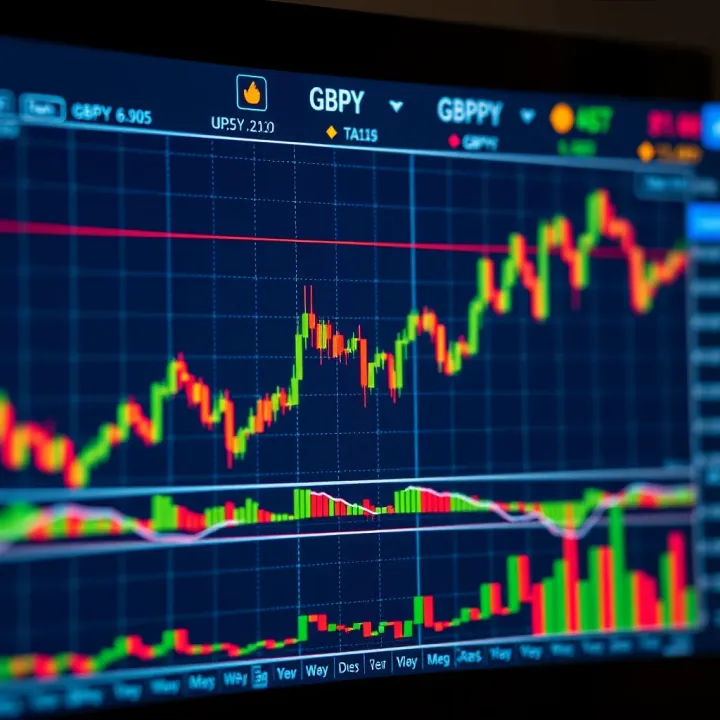
Economic and political factors shape the GBPJPY pair’s movements more than most traders expect. These elements influence market confidence and currency demand, which directly affects price action. For Kenyan traders, understanding these factors can improve timing and decision-making, helping to avoid unnecessary losses. This is especially useful given GBPJPY’s reputation for wide swings tied to broader economic shifts.
UK inflation and GDP growth are primary indicators to watch. Inflation data, especially the Consumer Price Index (CPI), influences the Bank of England’s (BoE) interest rate decisions—which in turn affect the pound’s value. For instance, rising inflation often pressures BoE to hike rates, pushing GBP higher. Conversely, weak GDP growth signals economic slowdown, potentially leading to monetary easing and a weaker pound. Traders should track these figures closely around release dates, as volatility spikes often occur.
Moving to Japan’s monetary policy and economic data, the Bank of Japan (BoJ) holds a unique position with its long-standing low or negative interest rate policies. Unlike other central banks, the BoJ is more cautious, often using yield curve control to keep long-term borrowing costs down. Inflation levels in Japan tend to be subdued, limiting BoJ’s flexibility. Kenyan traders must watch BoJ announcements and key inflation reports, as any hint of policy shift can cause sharp moves in JPY pairs including GBPJPY.
Employment statistics and trade balances give additional clues on both sides. For the UK, employment numbers impact consumer spending and overall economic health. High employment usually supports the currency. For Japan, trade balances matter since it’s a major exporter. Surpluses often strengthen JPY as foreign buyers exchange currencies to purchase Japanese goods. However, deficits can weaken JPY. Monitoring monthly employment and trade data helps anticipate near-term pressures on the currencies.
Brexit developments and UK politics continue to ripple through GBPJPY despite the supposed resolution years ago. Political uncertainty over trade deals or government stability can dent market confidence in GBP. For example, when Theresa May’s government faced Brexit roadblocks, GBPJPY saw notable volatility. Kenyan traders benefit from staying updated on UK parliamentary debates, as surprises here tend to trigger swift price adjustments.
Over in Japan, diplomatic relations and regional stability shape JPY’s safe haven status. Japan’s proximity to geopolitical hotspots like North Korea or tensions with China means jitters can boost demand for the yen. If diplomatic talks go sour or military activity escalates, the yen often appreciates as traders seek safety. Kenyan traders should watch news out of East Asia alongside economic news to better gauge risk sentiment affecting JPY.
Lastly, global risk sentiment plays a decisive role. The yen typically gains when markets turn risk-averse due to its safe-haven appeal, while the pound can suffer under similar circumstances. Economic shocks, such as crises in emerging markets or sharp commodity price swings, influence this sentiment. Kenyan investors should note that during global turmoil, GBPJPY can swing widely and unpredictably, requiring cautious position sizing and strict risk management.
Understanding these economic and political dynamics provides Kenyan traders practical insight into GBPJPY’s price moves, making their trades more informed and better timed.
Monitor key UK economic releases and BoJ policy updates regularly.
Stay alert to UK political developments and East Asian geopolitical news.
Watch risk appetite changes that affect safe-haven flows.
This approach helps Kenyan traders navigate GBPJPY’s twists and turns with more confidence and less guesswork.
Technical analysis plays a key role in forecasting GBPJPY movements by helping traders read price action and make informed decisions without relying solely on news events. For Kenyan traders, understanding chart behaviour can enhance entry and exit timing, crucial in a rapidly changing forex market. This approach allows one to spot patterns and trends that often repeat, offering clues about future price direction.
Identifying support and resistance levels helps traders recognise price points where demand or supply has previously pushed GBPJPY prices to stall or reverse. For example, if GBPJPY hits a certain level several times but fails to rise above it, that level becomes resistance. Conversely, prices that repeatedly bounce back from a particular zone form support. Spotting these levels aids Kenyan traders in setting stop-loss orders or take-profit points, making risk management more effective.
Trendlines and price channels provide a visual guide to the overall direction of GBPJPY. Drawing an upward trendline connecting rising lows signals a bullish trend, while a descending line tracing lower highs points to a bearish run. Price channels, formed by parallel trendlines, help traders understand the range in which GBPJPY may oscillate. Kenyan traders can use these to ride trends confidently or prepare for possible reversals when the price breaks out of the channel.
Common reversal and continuation patterns, such as head and shoulders, double tops, or flags, give insight into potential trend changes or pauses. For instance, a double top near a resistance level might warn of a possible downward reversal. Recognising these patterns early enables traders to adjust positions promptly, which is especially useful during volatile sessions like Tokyo or London hours when GBPJPY tends to show significant movements.
Moving averages and crossovers smooth out GBPJPY price data to highlight trends. The simple moving average (SMA) over 50 or 200 periods is popular among Kenyan traders for spotting long-term momentum. A crossover, where a short-term average like the 20-day SMA crosses above a longer one, often signals a buy opportunity, while the opposite suggests selling. These tools assist traders in filtering noise and confirming trend strength.
The Relative Strength Index (RSI) measures the speed and change of price movements to identify overbought or oversold conditions in GBPJPY. An RSI above 70 may indicate the pair is overbought and due for a pullback, while below 30 suggests oversold levels and potential bounce back. Kenyan traders can use RSI readings to avoid chasing prices and time entries more precisely.
MACD (Moving Average Convergence Divergence) and momentum analysis help in tracking GBPJPY’s trend direction and strength. MACD combines moving averages to produce buy or sell signals based on crossovers and divergence from price trends. Momentum indicators reveal if the price change is gaining or losing speed, critical for validating breakouts or trend reversals. Using these tools together gives traders a more balanced view before taking a position.
Technical analysis isn't about predicting the future with certainty but about increasing the chances of success by observing patterns and signals that have worked historically.
Kenyan traders who blend chart patterns, trendlines, and reliable indicators like RSI and MACD stand a better chance of navigating GBPJPY’s fluctuations profitably, especially in a market buffeted by both local and global factors.
Understanding the outlook and projections for GBPJPY is essential for traders looking to navigate this currency pair effectively. Forecasting helps traders anticipate market moves, plan entry and exit points, and manage risks accordingly. For Kenyan investors, this insight can lead to smarter decisions when trading on platforms like FXPesa or using M-Pesa for seamless transactions.
Economic data such as the UK inflation rate or Japan’s Tankan survey can cause immediate price shifts in GBPJPY. For example, a stronger-than-expected UK GDP report might boost the British pound, pushing the pair higher. Kenyan traders should monitor these releases closely on economic calendars and be ready for volatility spikes. Swift reactions to these events can create opportunities for short-term gains, but it's wise to have clear stop-loss orders in place.
GBPJPY tends to be most active during the London and Tokyo trading sessions when liquidity is highest. The overlap between these sessions often triggers larger price movements. Kenyan traders trading from Nairobi time (EAT) should understand these peak times, as trading outside these hours might result in lower volatility and wider spreads. Recognising these fluctuations allows for better timing of trades and managing the risk of sudden price swings.
Price ranges in GBPJPY often form at key support and resistance levels. For instance, if the pair consolidates near 150.00, a breakout above this point could trigger a sharp move upward. Kenyan investors should watch for these patterns and consider breakout strategies, especially when accompanied by high trading volume or relevant news. Conversely, failure to break such levels might signal a reversal or sideways movement, where range trading could be more appropriate.
The Bank of England (BoE) and Bank of Japan (BoJ) drive long-term trends through interest rate decisions and quantitative easing programmes. A tightening BoE amid Japan’s accommodative stance can strengthen GBPJPY over time. Kenyan traders should keep tabs on official statements and policy shifts, as these influence their strategic positioning, especially for swing trades or longer-term investments.
Recovery patterns post-pandemic or during global slowdowns affect GBPJPY. For instance, robust UK economic reopening coupled with Japan’s export demand growth can support a bullish trend. Kenya’s trade links and exposure to international markets mean traders here stand to benefit from understanding these global dynamics influencing GBPJPY movements.
Risks like unexpected geopolitical events, UK politics, or shifts in global risk sentiment can unsettle GBPJPY trends. Sudden changes, such as escalating tensions in Asia or UK economic policy changes, could lead to sharp reversals. It's vital for Kenyan traders to stay updated through reliable news sources and adjust their risk management strategies to withstand such uncertainties.
Staying informed and prepared for both short-term fluctuations and long-term trends in GBPJPY is key for Kenyan traders looking to maximise gains and minimise losses.
Trading GBPJPY offers great opportunities, but it also comes with risks, especially in the volatile forex market. For Kenyan investors, practical trading tips are essential to navigate these waters safely and profitably. This section focuses on risk management, using local payment systems, and selecting the right brokers—all tailored to Kenyan trading realities.
Setting stop losses and take profits helps you control losses and lock in profits efficiently. For instance, if you buy GBPJPY at 150.00, setting a stop loss at 149.00 limits your loss to 100 pips if the trade goes against you. Similarly, placing a take profit at 152.00 secures gains once the price reaches your target. These tools prevent emotional decisions and protect capital from sudden market swings common in GBPJPY pairs.
Position sizing for Kenyan traders is about managing the amount invested per trade relative to your overall capital. If your trading account has KS00,000, risking 2% per trade means you only risk KS,000. Proper position sizing avoids big losses in one trade that can wipe your account. Kenyan traders should calculate lot sizes based on their risk tolerance and account balance, avoiding the temptation to trade bigger just to chase profits.
Managing leverage prudently is critical because forex brokers offer high leverage, sometimes up to 1:500. While this can amplify profits, it increases the risk of rapid losses. Kenyan investors should use lower leverage levels, such as 1:10 or 1:20, especially when starting out. For example, with KS0,000, using 1:20 leverage means exposure to KS million, which is risky enough without overexposing your account.
M-Pesa integration with forex brokers has made funding and withdrawing from trading accounts more accessible in Kenya. Several brokers now allow instant deposits via M-Pesa, cutting delays and extra fees. This convenience means Kenyan traders can enter or exit positions fast without attending banks or using credit cards, which might be costly or unavailable.
Popular local and international brokers include firms like Exness, HotForex, and AvaTrade that provide user-friendly platforms with local payment options. Choosing a broker regulated by trusted authorities (such as FCA or CMA Kenya) ensures your funds are safer. Kenyan traders benefit from brokers offering Swahili support, local customer service, and platforms like MetaTrader 4 and 5, which are widely used.
Accessing timely market information is vital for making good trading decisions. Kenyan traders should follow economic calendars, news apps like Bloomberg or Reuters, and local business news. Using platforms that provide real-time quotes and updates helps react swiftly to UK or Japan economic data releases impacting GBPJPY. For example, knowing when the Bank of England announces interest rates lets you prepare ahead.
Good trading is not just about guessing price direction but managing risk and using resources wisely to make informed decisions.
These practical tips can help you stay ahead in GBPJPY trading while protecting your capital and using local conveniences effectively.
📊 Explore GBP/USD trends and forecasts with insights on UK and US economies, market shifts, and global impacts. Perfect guide for Kenyan traders and businesses!

📈 Master TradingView.com with this practical guide for Kenyan traders! Learn to use charts, tools, and local market data to enhance your trading decisions. 🇰🇪

📈 Discover how Kenyan traders can use TradingView to analyse local markets, set up M-Pesa payments, and enhance trading decisions with practical tips and tools.

📈 Explore OlympTrade's features, accounts, and trading types. Learn how Kenyan traders can register, deposit with M-Pesa, stay safe, and trade smartly on this platform.
Based on 13 reviews